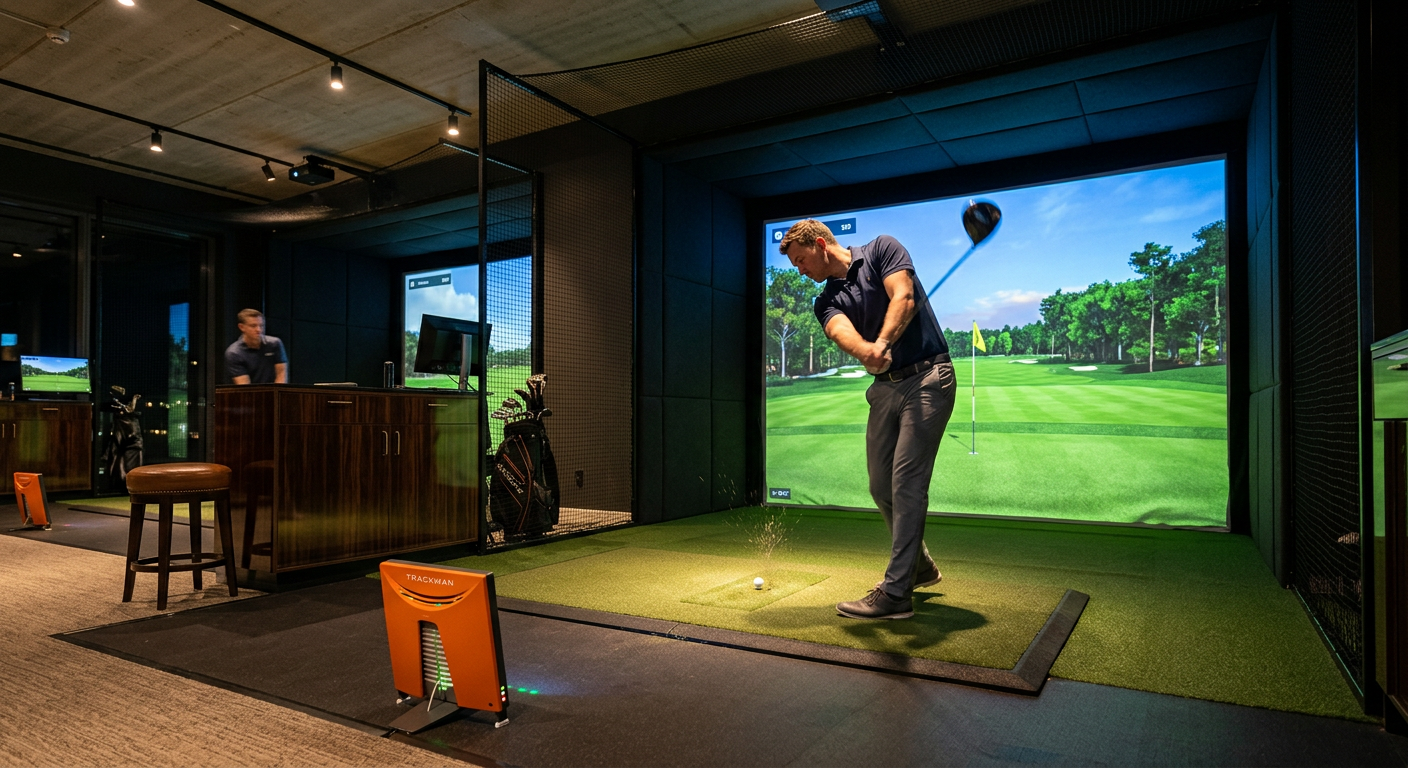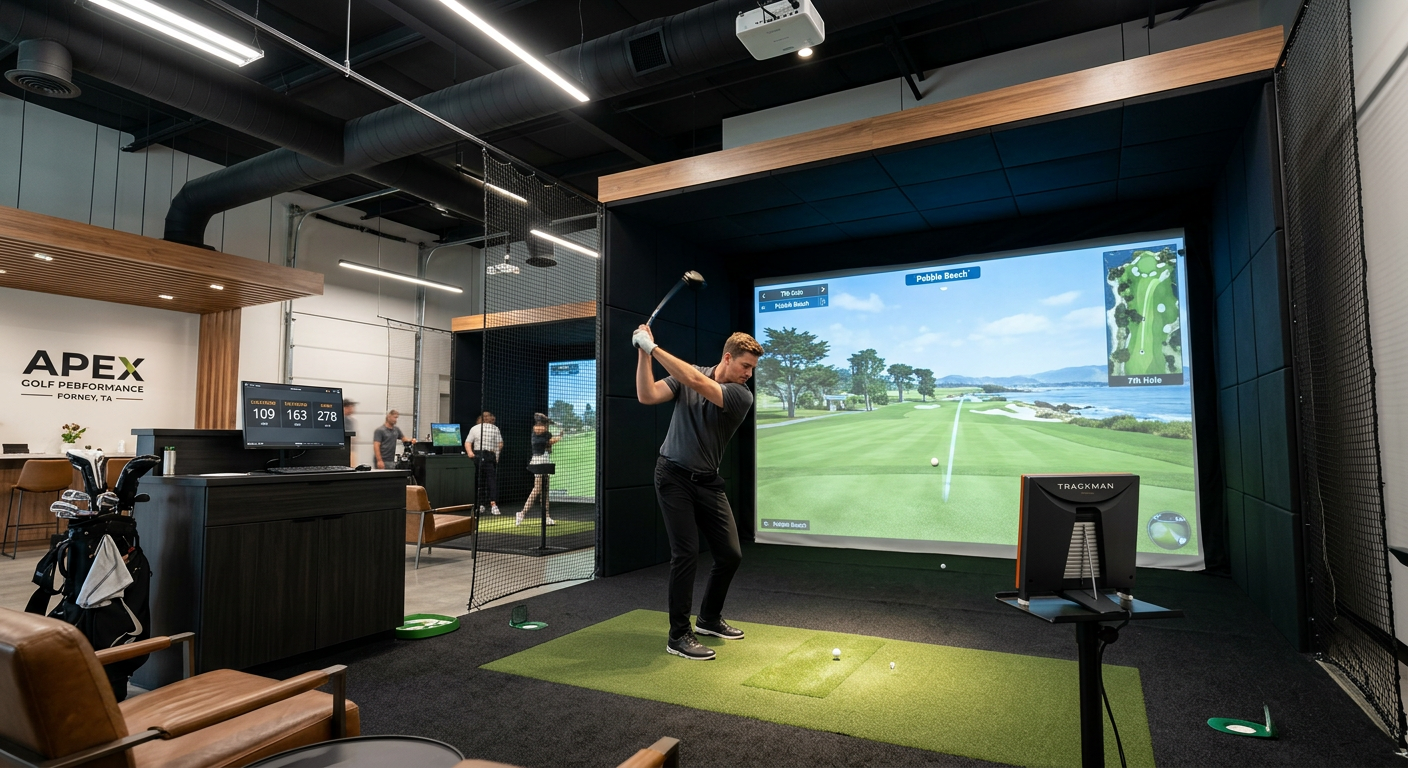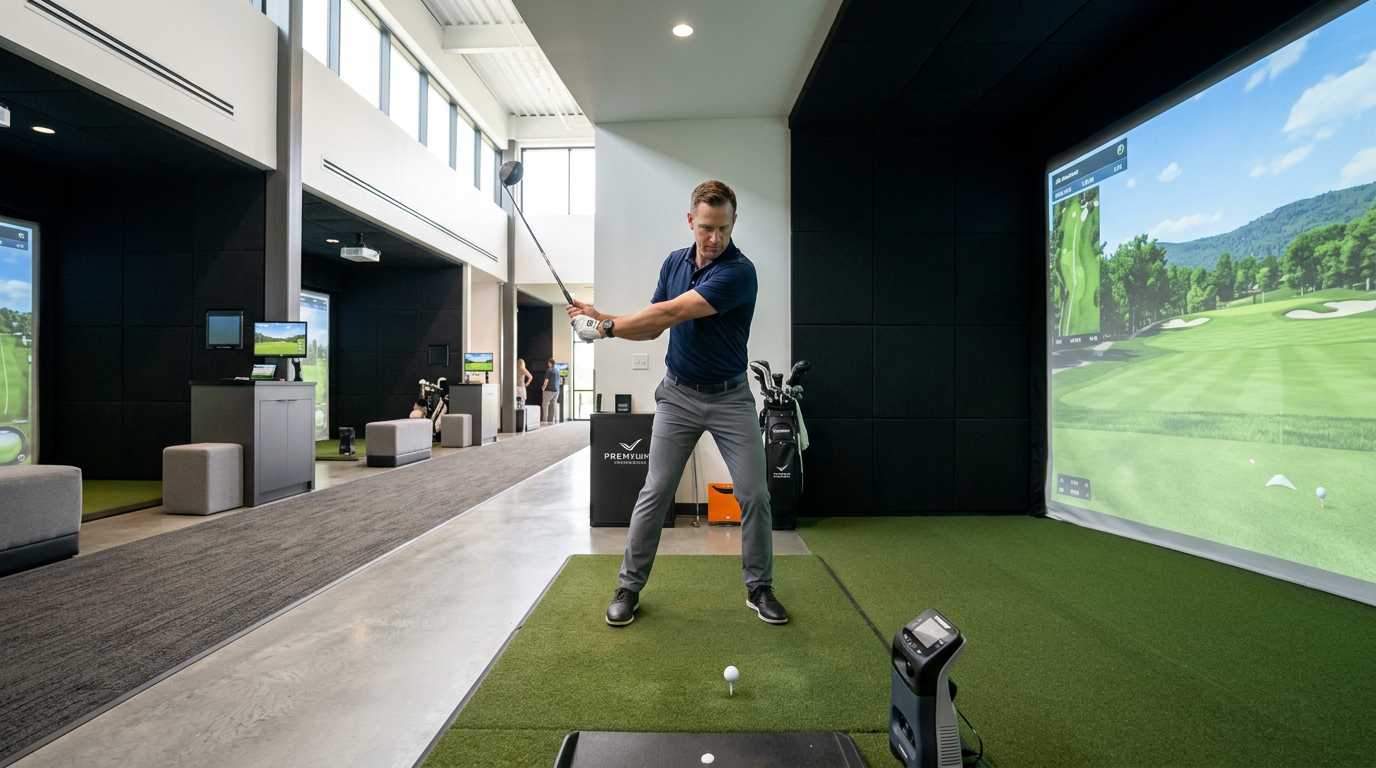
The short answer is yes—a golf simulator can significantly improve your game by providing precise data, allowing for high-frequency practice, and creating a controlled environment where you can isolate specific swing flaws. Unlike a traditional driving range where you often rely on guesswork to judge distance and ball flight, a top-tier simulator setup offers objective feedback that accelerates the learning process.
For golfers in the North Texas area, especially around Forney and Kaufman County, transitioning some practice time indoors isn't just about escaping the summer heat or winter wind; it is about utilizing professional-grade tools to make every swing count.
The Science of Improving with Instant Feedback
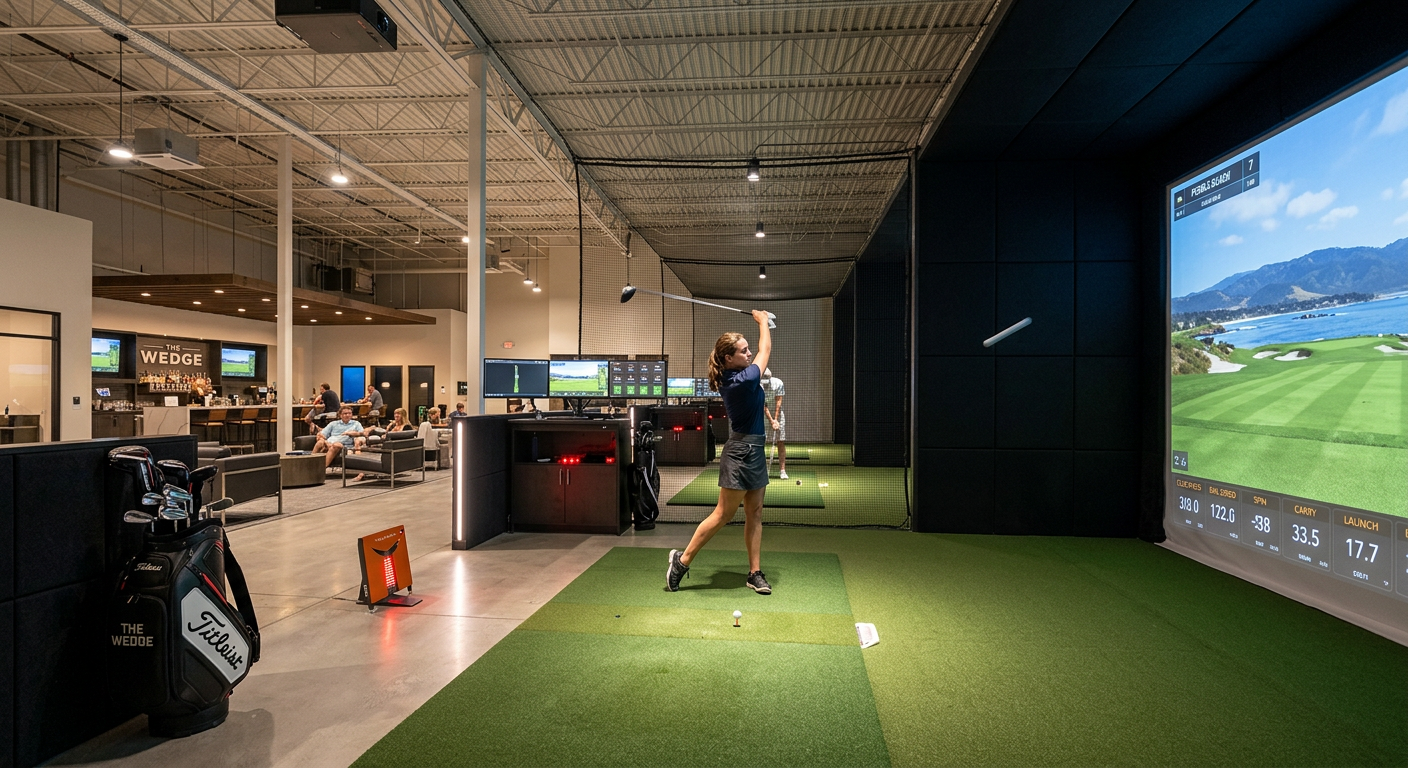
One of the primary reasons golfers struggle to lower their handicap is the "feel vs. reality" gap. You might feel like you are coming from the inside, but in reality, your path is over the top. A simulator identifies these discrepancies instantly. At The Wedge in Forney, we utilize technology that tracks over 40 parameters of the club and ball at impact.
When you can see your exact club path, face angle, and spin rate immediately after a shot, your brain begins to correlate those numbers with the physical sensation of the swing. This immediate visual and data-driven feedback is a hallmark of sports psychology; it shortens the feedback loop, allowing for faster adjustments than traditional practice. You can learn more about how this works by exploring our guide on how do golf simulators work to understand the sensors and radar involved.
Developing Muscle Memory Through Block Practice
In the world of athletic training, "block practice" refers to performing the same movement repeatedly to solidify muscle memory. On a standard outdoor course, you might only hit your 7-iron five or six times over four hours. In a simulator bay, you can hit fifty 7-irons in thirty minutes.
This controlled environment is free from the distractions of wind, uneven lies, or the need to go find your ball. By removing these variables, you can focus entirely on a specific mechanical change, such as your hand position at the top of the swing or your weight transfer through impact. This level of repetition is what builds a repeatable, reliable swing that holds up under pressure when you return to the golf courses near Forney for your weekend round.
Precision Gapping and Yardage Control
Most amateur golfers do not know their true carry distances. They know how far they hit their 8-iron that one time downwind, but they don't know their average carry on a calm day. A simulator provides the perfect laboratory for "gapping" your bag.
By hitting ten balls with every club and looking at the average carry distance, you can eliminate the "dead zones" in your bag. This is particularly vital for the short game and wedge play. When you know for a fact that your 56-degree wedge carries exactly 84 yards, your confidence on the course skyrockets. Professional organizations like the PGA of America emphasize that indoor practice allows for this kind of specific distance control that is difficult to replicate accurately on a standard outdoor range where range balls often fly differently than premium balls.
Master Course Management Without the Four Hour Committment
Improvement isn't just about the mechanics of the swing; it is also about strategy. High-definition simulators allow you to play famous courses from around the world. This helps you practice "situational golf."
Are you struggling with forced carries over water? Do you always slice it when there are trees on the left? Playing virtual rounds allows you to test different strategies and see how they affect your score. You can practice hitting a "3-wood for safety" versus "driver for distance" on the same hole multiple times to see which leads to a better average score. This type of data-driven strategy directly translates to better decision-making when you are playing at local spots like those mentioned in our guide to golf courses in Forney and beyond.
Frequent Practice regardless of Texas Weather
Consistency is the most difficult thing to achieve in golf. In Texas, unpredictable thunderstorms or 100-degree afternoons often lead to weeks-long breaks in practice. These gaps cause "swing rust."
Indoor facilities provide a climate-controlled space that ensures your practice schedule remains uninterrupted. By maintaining a consistent routine throughout the year, you ensure that your swing remains fluid and your muscles stay conditioned. This reliability is why indoor golf ranges are becoming the preferred choice for serious golfers who don't want their progress dictated by the forecast.
Frequently Asked Questions
Can a simulator help with my putting?
Yes. Modern simulators track the initial launch angle and skidding of the ball, helping you dial in your pace and start line. While it feels different than grass, the data on your face angle at impact is invaluable.
Is the ball flight on a simulator realistic?
When using high-end technology like TrackMan, the ball flight is extremely accurate. It accounts for spin, launch angle, and ball speed to project a trajectory that mirrors what you would see outdoors.
Will practicing indoors mess up my game for outdoors?
No, as long as you focus on the data and swing mechanics. Many pros use simulators exclusively for technical work because it allows them to ignore where the ball goes and focus entirely on how the club is moving.
Do I need to be a pro to use a simulator?
Not at all. In fact, beginners often benefit the most because the data helps them understand the basic physics of why a ball slices or hooks much faster than traditional instruction might.
Start Lowering Your Scores at The Wedge
If you are ready to stop guessing and start improving, it is time to change how you practice. At The Wedge in Forney, we provide the tools, the technology, and the environment you need to see real results on your scorecard. Whether you are looking to fix a persistent slice, dial in your yardages, or simply enjoy a round on a world-class course without the Texas heat, our TrackMan-powered bays are ready for you.
As a proud member of the Forney Area Chamber of Commerce, we are committed to helping our local community of golfers reach their full potential. Visit us today to experience the future of golf practice.
Ready to see the data for yourself? Book your session at The Wedge and start building a better swing today.