The dream of having a year-round practice facility in your home is one shared by many golfers in North Texas. However, before ordering an impact screen or hitting mat, you must answer the most critical structural question: how high does a ceiling need to be for a golf simulator?
To answer this directly, the absolute minimum ceiling height for a golf simulator is 9 feet, but 10 feet is the recommended industry standard for safety and comfort. If you are a taller golfer or have a particularly steep swing, you may even require 11 to 12 feet of clearance to avoid damaging your ceiling or your clubs. Understanding these dimensions is the first step in determining if your spare room or garage can handle the physics of a full-speed driver swing.
The Minimum Ceiling Height for Safe Swinging
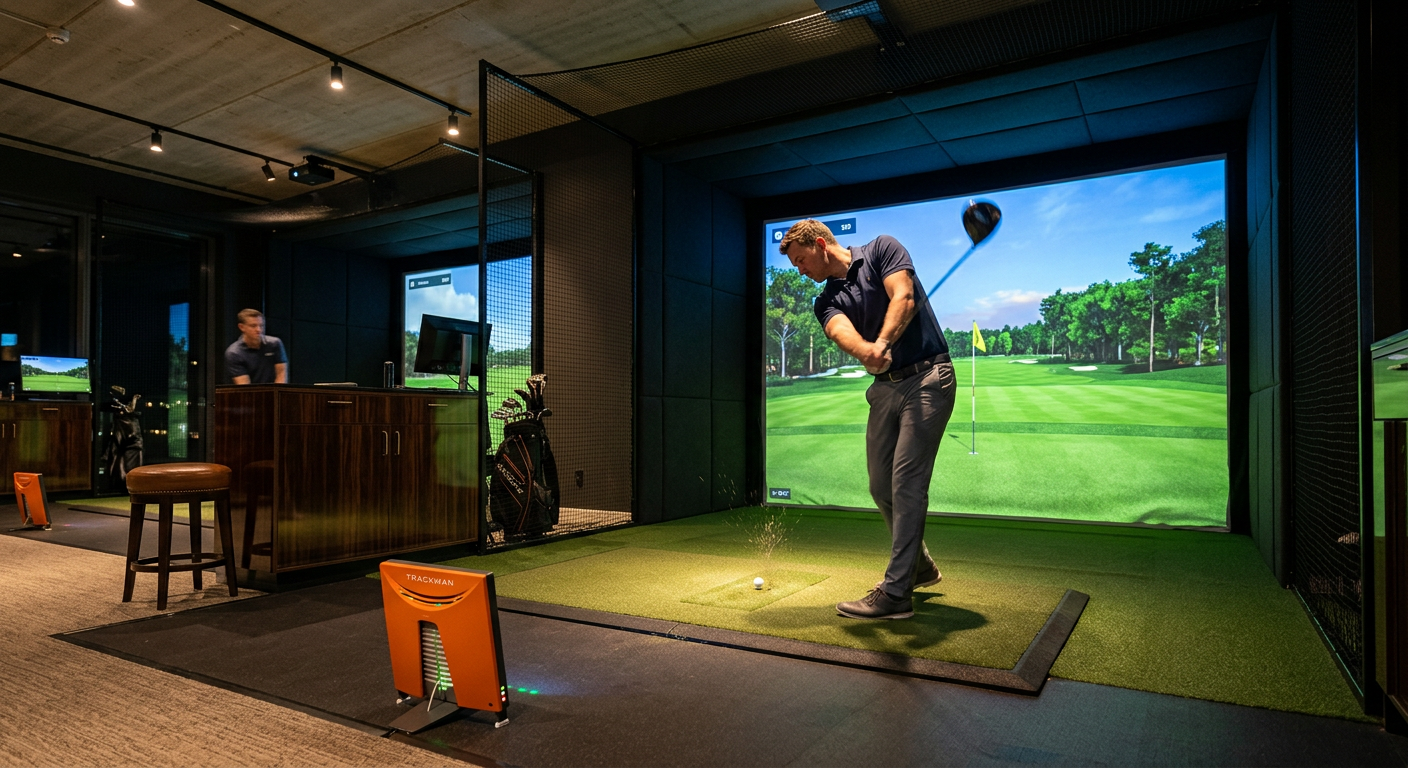
While some golfers can technically clear an 8.5-foot ceiling with a wedge or short iron, a golf simulator is designed for full-bag practice. The limiting factor is always the driver. When you swing a 45-60 inch club at high speeds, the arc of the clubhead often extends much higher than the golfer's actual height.
For most residential builds in Forney, standard ceiling heights are often set at 8 or 9 feet. According to technical specifications from Rain or Shine Golf, a 9-foot ceiling is the point where most golfers can swing without hitting the drywall, but it often feels restrictive. This psychological barrier can lead to a "protected swing," where the golfer subconsciously alters their mechanics to avoid a collision, effectively ruining the quality of practice.
Why 10 Feet is the Industry Standard
If you are following a comprehensive guide to building a golf simulator room, you will find that 10 feet is the "sweet spot." This height provides several layers of necessary clearance:
- The Hitting Mat: Most high-quality hitting mats are 1 to 2 inches thick. If you are building a recessed floor or using a thick plush mat, you are effectively reducing your ceiling height by that amount.
- Follow-Through Room: A standard driver swing doesn't just go high; it goes high during the follow-through when the club is furthest from the body. Ten feet ensures that even if you have a high finishing position, you won't clip the ceiling.
- Projector Placement: To get a clear, crisp image on your impact screen, the projector is often mounted to the ceiling. A 10-foot ceiling allows the projector to sit above the swing plane, protecting the hardware from accidental strikes.
How Your Personal Swing Affects Height Requirements
Not every golfer requires the same amount of vertical space. Your physical height and your swing plane are the two largest variables. A golfer who is 6'4" with an upright swing will almost certainly need more than 10 feet of clearance. Conversely, a shorter golfer with a flatter, more "around-the-body" swing might feel perfectly comfortable in a 9-foot space.
To test your specific needs, we recommend taking your driver into the proposed space and slowly mimicking a full-speed swing. If you feel any hesitation or find yourself looking up during the finish, the space is likely too small. Many golfers who realize their home dimensions are insufficient find that indoor golf ranges are the best alternative, as professional facilities are designed specifically to accommodate these vertical clearances.
TrackMan Technology and Depth Requirements
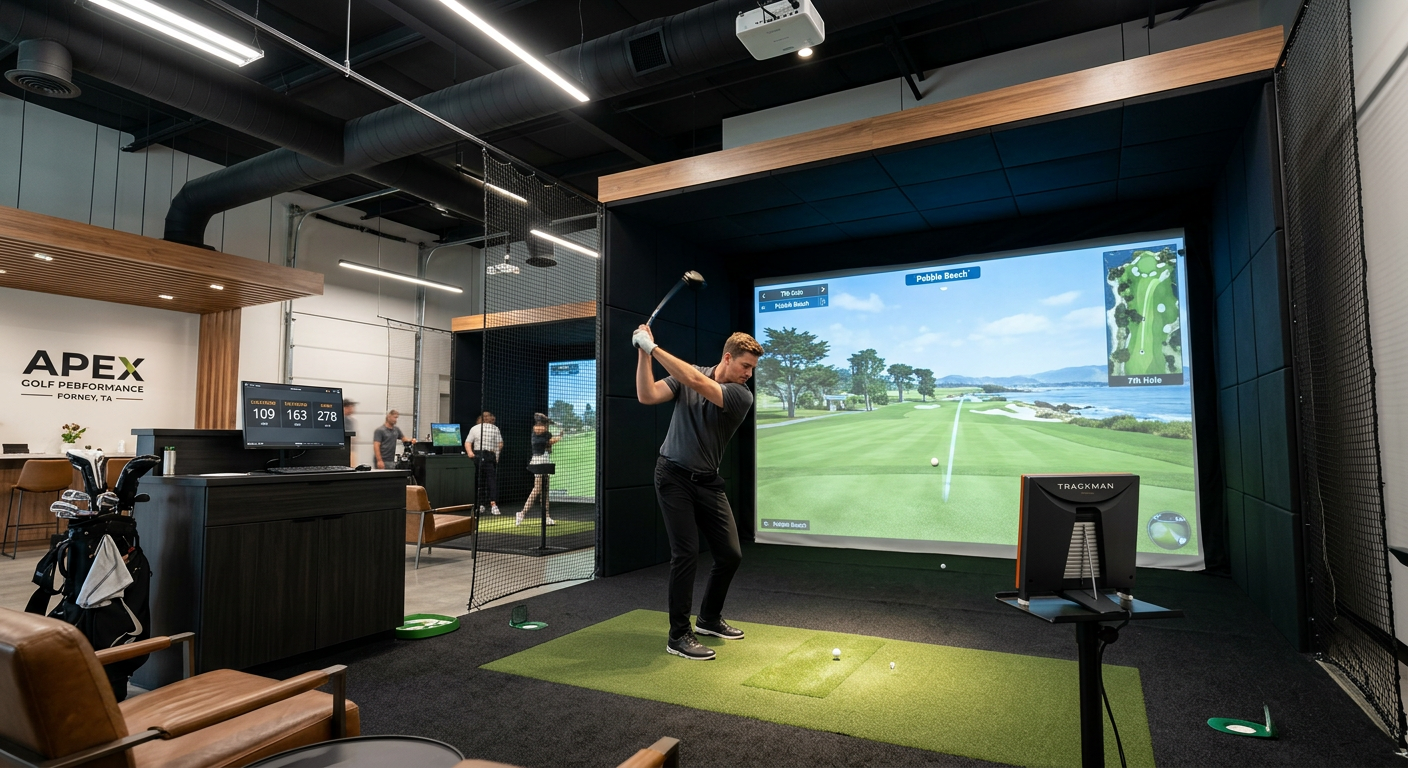
Height is only one part of the equation. If you are using professional-grade launch monitors, you must also consider depth. TrackMan technology, for example, requires a specific amount of space both behind the golfer and in front of the hitting area to accurately capture data.
According to TrackMan's space requirements, the radar needs enough distance to track the club and the ball flight before it hits the screen. Usually, this means a total room depth of 12 to 15 feet. Combining this depth with a 10-foot ceiling creates the ideal environment for accurate ball-flight physics. If you want to learn more about the technical side, you can read about how do golf simulators work to understand why these spatial dimensions are so critical for data integrity.
Local Building Codes and Home Simulations in Forney
In many newer developments across the Forney area, standard garage ceilings are rarely built to the 10-foot or 12-foot heights required for a comfortable simulator. Residents looking into home modifications should consult the City of Forney Community Development department regarding building permits if they plan on raising a ceiling or converting a garage into a permanent structure.
In North Texas, a common workaround is the "tray ceiling," but this often only provides height in a small rectangle, which may not align with where your swing arc is highest. This is why many local players choose professional membership options rather than dealing with the high costs and structural limitations of a home renovation.
Frequently Asked Questions About Simulator Height
Can I use a golf simulator with an 8-foot ceiling?
It is not recommended. While you might be able to hit short irons, you will likely strike the ceiling with your woods and driver. Additionally, it is very easy to damage the ceiling with the clubhead on the follow-through.
Does the screen height have to match the ceiling height?
Not necessarily, but it is better if it does. Ideally, the impact screen should be high enough to catch "skyed" balls or high-spinning wedges. If your ceiling is 10 feet high but your screen is only 7 feet, you risk hitting the wall above the screen.
Do I need more height for a launch monitor?
The launch monitor itself doesn't usually require extra ceiling height, but it does require a clear line of sight. If your ceiling is too low, you might find that your lighting or projector interferes with the sensor's ability to "see" the ball.
Start Training Without Structural Limits
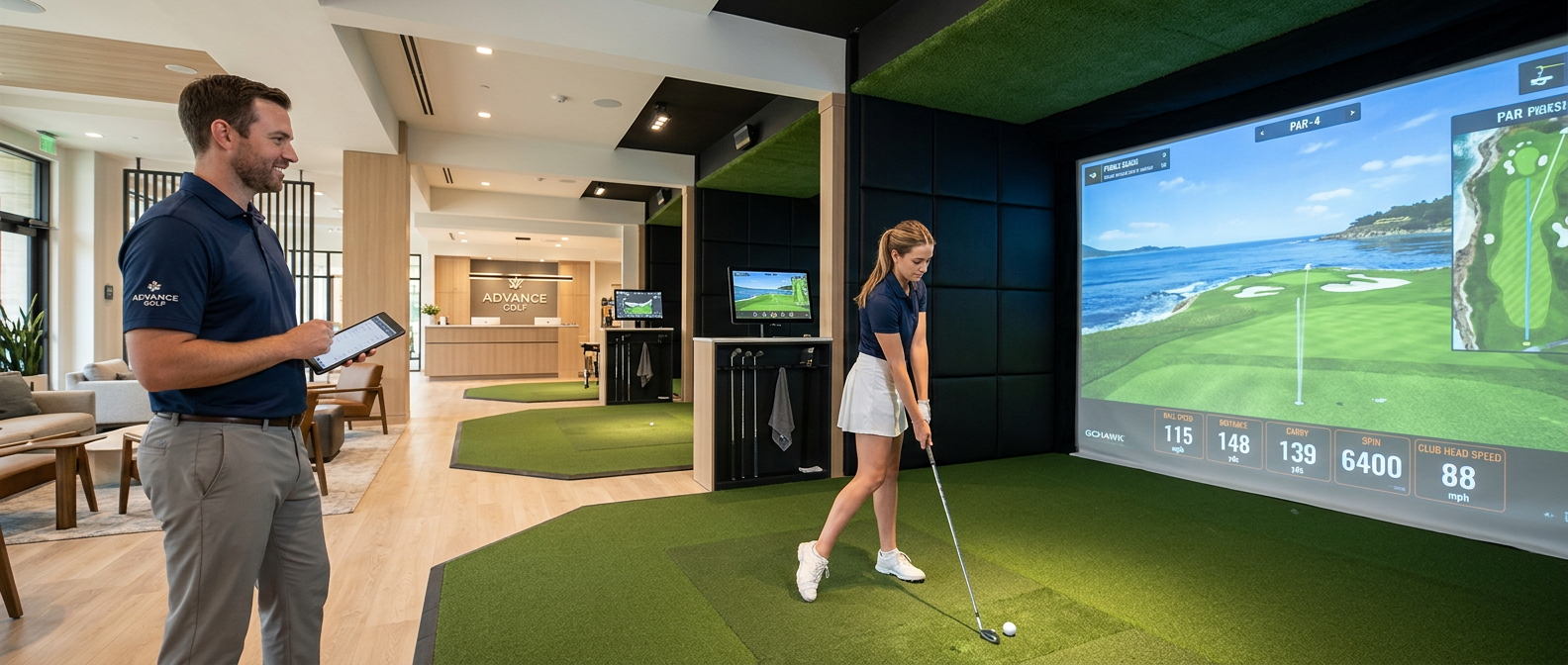
Building a home simulator is a significant investment, often costing thousands in hardware and renovations. If you find that your home dimensions don't quite meet the 10-foot gold standard, you don't have to settle for restricted swings or broken drywall.
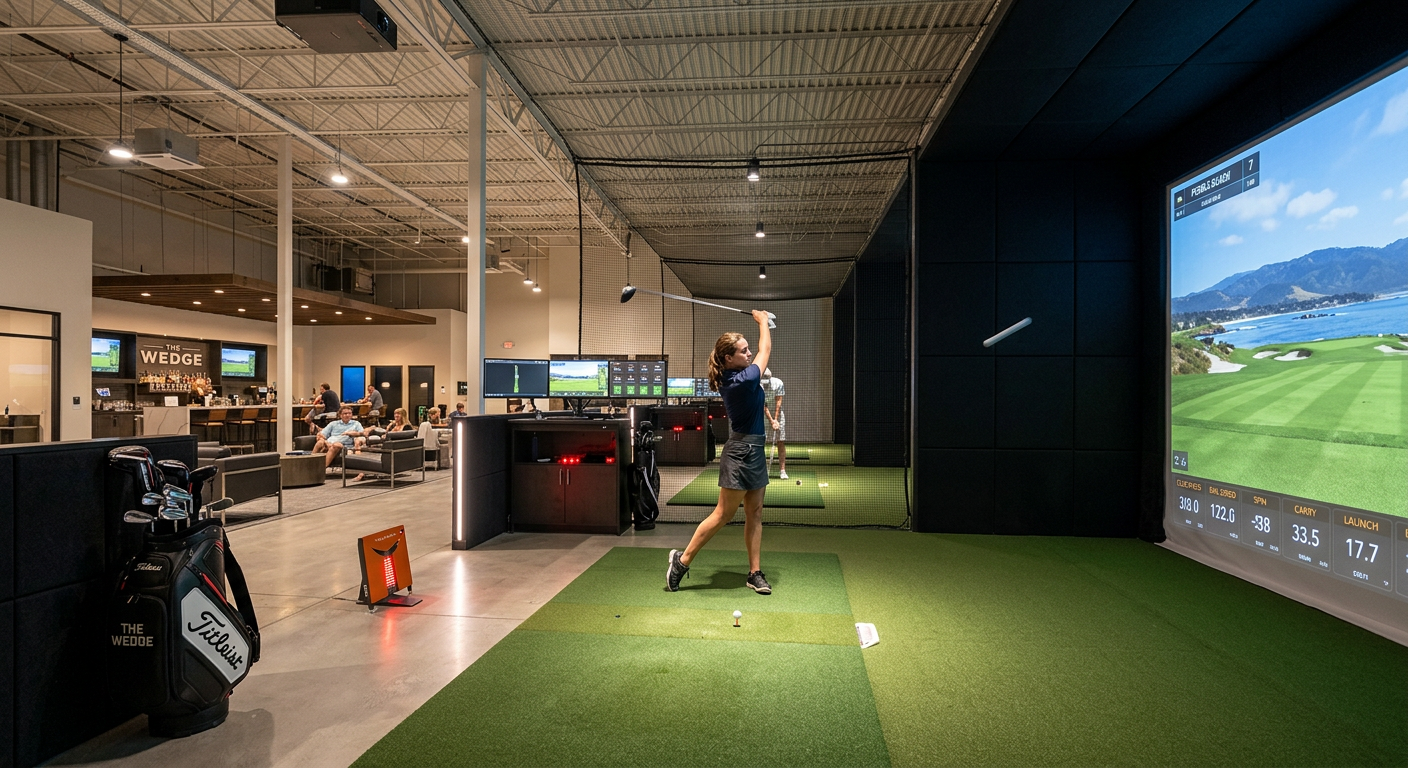
At The Wedge in Forney, we have designed our facility to provide the ultimate indoor training experience. Our bays features soaring ceilings and the latest TrackMan technology, ensuring you can swing every club in your bag with total confidence. Whether you are looking for training programs to lower your handicap or just a professional place to practice away from the Texas heat, we have the space you need. Stop by and see how the right environment can transform your game.