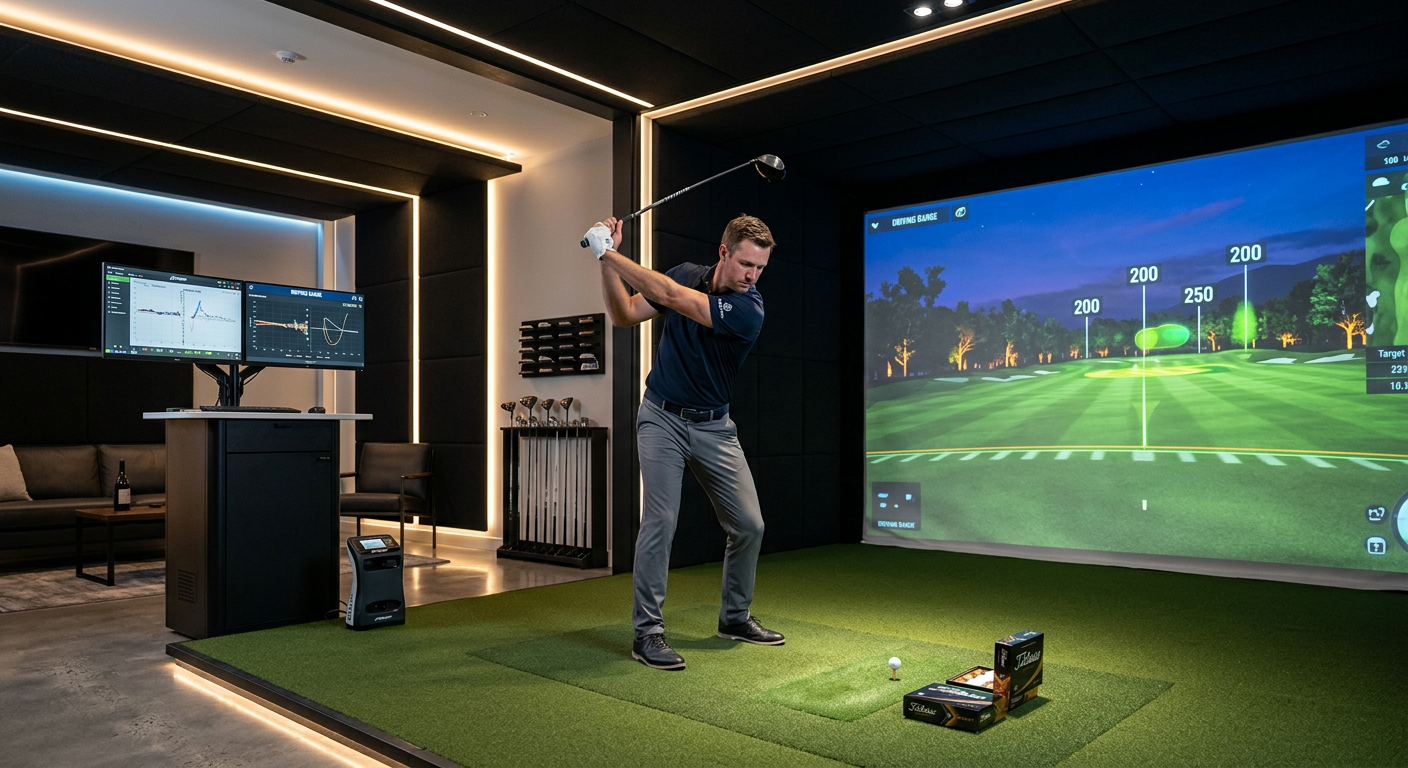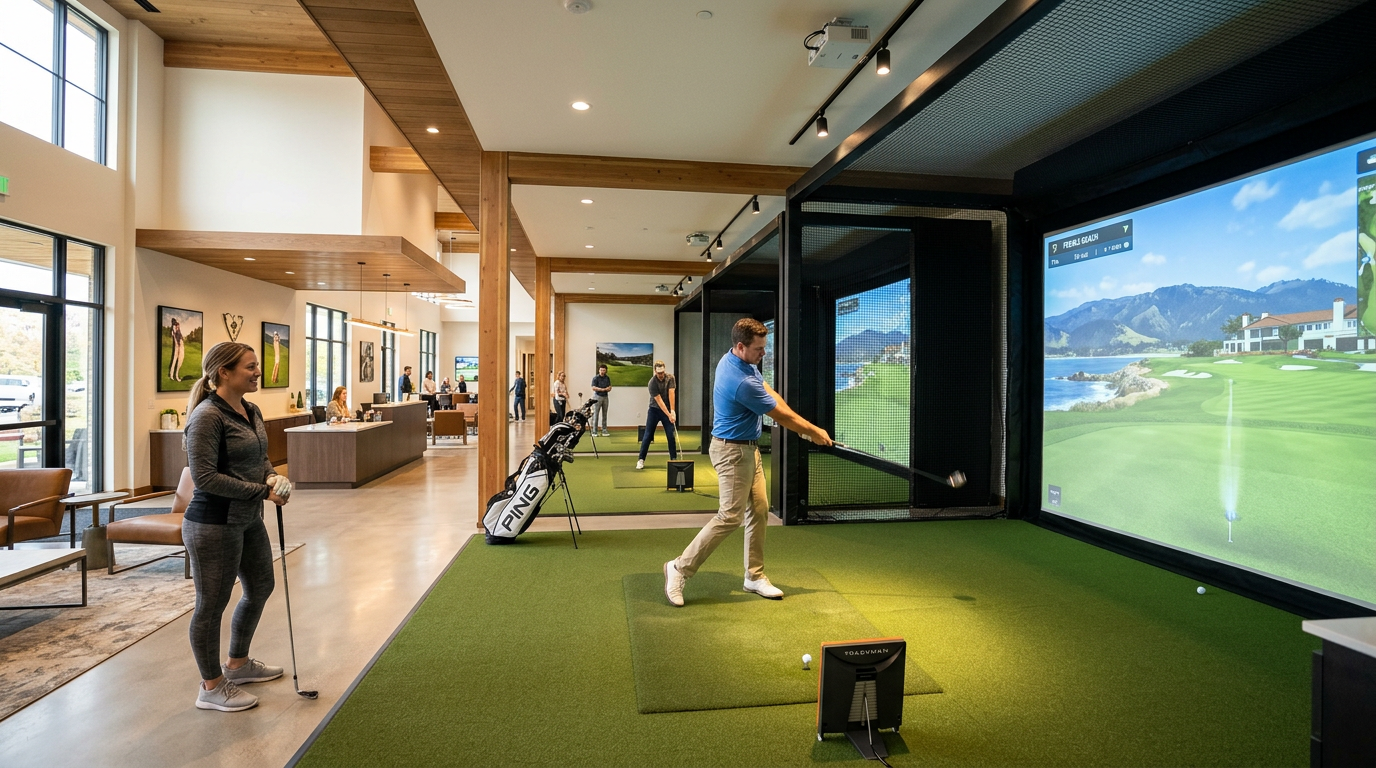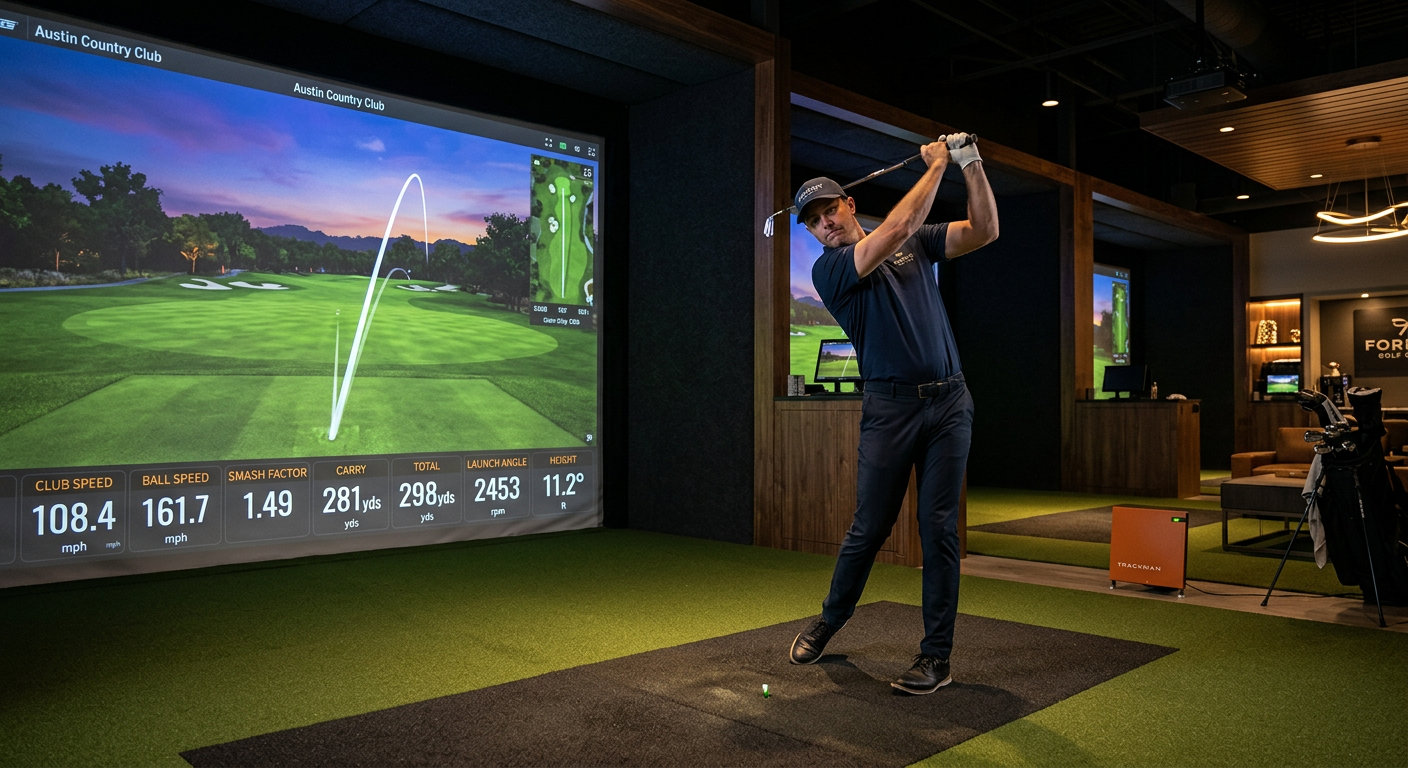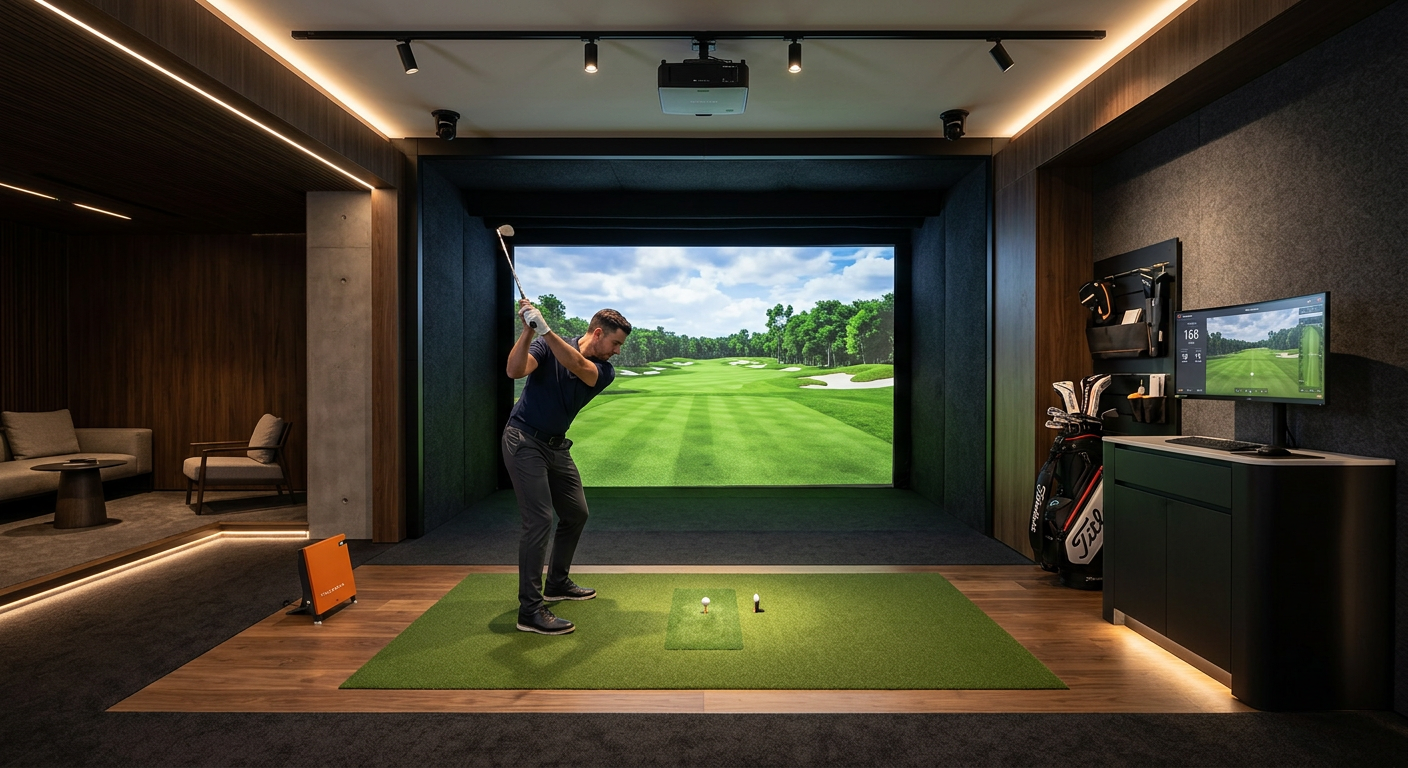
Building your own indoor golf sanctuary is a dream for many players, but knowing how to make a golf simulator requires careful planning across four main categories: space, technology, hitting equipment, and computing power. To successfully build a setup, you must ensure you have at least 9 to 10 feet of ceiling height and a budget that covers everything from the launch monitor to the impact screen and turf.
While some golfers opt for a DIY approach to save money, others realize that the complexity and cost of professional-grade hardware can be an obstacle. At The Wedge in Forney, we provide a high-end alternative where you can experience the industry standard in ball tracking without the technical headaches of a home build. Whether you are building your own or looking for a place to practice, understanding the components of a simulator is the first step toward lower scores.
Assessing Your Space Requirements
Before you purchase a single piece of equipment, you must measure your intended room. The most common mistake in a DIY build is underestimated ceiling height. To safely swing a driver, you generally need a minimum of 9 to 10 feet of clearance. If your ceilings are lower, you risk damaging your property or, worse, developing a flat, restricted swing to avoid hitting the roof.
Beyond height, you need depth and width. A comfortable setup typically requires a room at least 12 feet wide and 15 to 18 feet deep. This depth allows for sufficient space between the ball and the impact screen—usually about 10 to 12 feet—and another 12 to 16 inches of "buffer zone" behind the screen to prevent the ball from hitting the wall and bouncing back toward the golfer. If you are building an outbuilding or converting a garage, you may want to check with the City of Forney, TX regarding local building codes or permits for electrical and structural modifications.
Choosing the Right Launch Monitor
The launch monitor is the "brain" of your simulator. It tracks the club and ball at impact and translates that movement into the digital world. There are two primary technologies used in these devices: Photometric and Doppler Radar.
Photometric monitors use high-speed cameras to take thousands of images of the ball at impact. These are often preferred for smaller indoor spaces because they only need to see the ball for a few inches to calculate data. Doppler Radar systems, such as the industry-leading technology used at The Wedge, track the entire flight of the ball. These systems are incredibly precise, tracking over 20 specific data points including club path, face angle, and spin rate. When researching how do golf simulators work, it is important to choose a monitor that fits both your budget and your available space.
Setting Up the Hitting Area: Mats and Screens
To protect your floors and your joints, you need a high-quality hitting mat. Cheap mats often lack the padding necessary to absorb the shock of a downward strike, which can lead to "golfer’s elbow" or wrist injuries over time. Look for 3D fiber mats that allow you to hit down and through the ball naturally.
The impact screen is equally vital. It must be durable enough to withstand ball speeds exceeding 150 mph. According to Golf Digest's guide on DIY builds, using a screen designed specifically for golf is a safety requirement; using a standard projector screen or a bedsheet will result in instant failure and potential injury. Many DIYers also install side netting or "blackout" curtains to catch errant shots that miss the screen.
Projectors and Computing Power
Once you have the physical hitting area built, you need a way to see your shots. A short-throw projector is the standard choice for golf simulators because it can be mounted close to the screen, preventing the golfer from casting a shadow on the image. You will want a projector with at least 3,000 lumens to ensure the image is bright enough even if there is some ambient light in the room.
To run the software, a dedicated PC with a high-end graphics card (GPU) is usually required. Most modern golf software, like the simulation packages offered by TrackMan, requires significant processing power to render 4K courses and real-time physics without lag. If you are curious about the total investment required for these components, you can view our breakdown on how much a golf simulator costs to compare entry-level DIY builds against professional setups.
Considering the Professional Alternative in Forney
Building a simulator is a rewarding project, but it is also a significant financial and time commitment. Costs for a reliable DIY setup often start at $2,000 for budget builds but can quickly climb to over $50,000 for professional-grade systems that offer the highest level of accuracy.
For many golfers in North Texas, visiting a dedicated facility is a more practical way to access our technology without the overhead. Residents in the Forney area can benefit from the community atmosphere and professional-grade feedback that a home garage setup might lack. Supporting local businesses through the Forney Area Chamber of Commerce also helps grow the local golf community, providing more opportunities for tournaments and league play.
Frequently Asked Questions
Can I build a golf simulator in my garage?
Yes, garages are the most common location for home builds. However, you must ensure the ceiling is high enough (9+ feet) and that you have adequate insulation for Texas summers.
How much space is required behind the impact screen?
You should leave at least 12 to 16 inches of space between the impact screen and the wall. This prevents the "trampoline effect" where the ball hits the wall and snaps back toward the golfer.
Is a DIY simulator as accurate as a pro setup?
Accuracy depends entirely on the launch monitor. Budget units can have a 3-5% margin of error, whereas elite systems like TrackMan provide tour-level precision. You can learn more by reading about whether golf simulators are accurate to see how different technologies compare.
What is the minimum ceiling height for a golf simulator?
While 9 feet is the absolute minimum, 10 feet is highly recommended. This allows most golfers to swing a driver without the fear of hitting the ceiling, which helps maintain a natural swing motion.
Experience Professional Precision at The Wedge
If you are not ready to commit to a full home build but want to sharpen your game using the world's best technology, come see us at The Wedge. We offer a premium indoor environment with professional TrackMan simulators that take the guesswork out of your practice sessions. Whether you want to analyze your swing data or just play a round on a world-class course, we provide the ultimate golf experience right here in Forney.
Ready to take your game to the next level? Contact us today to book a session or learn more about our membership options.