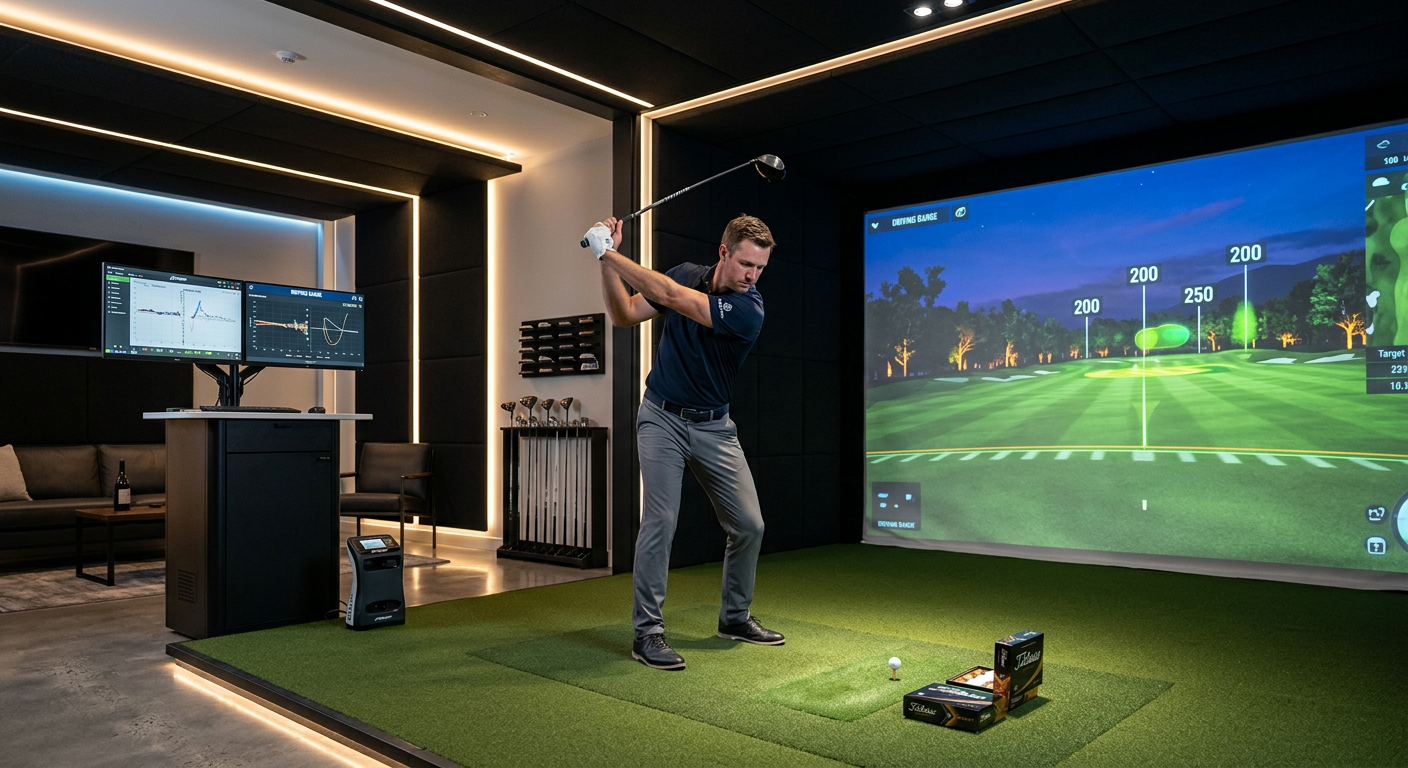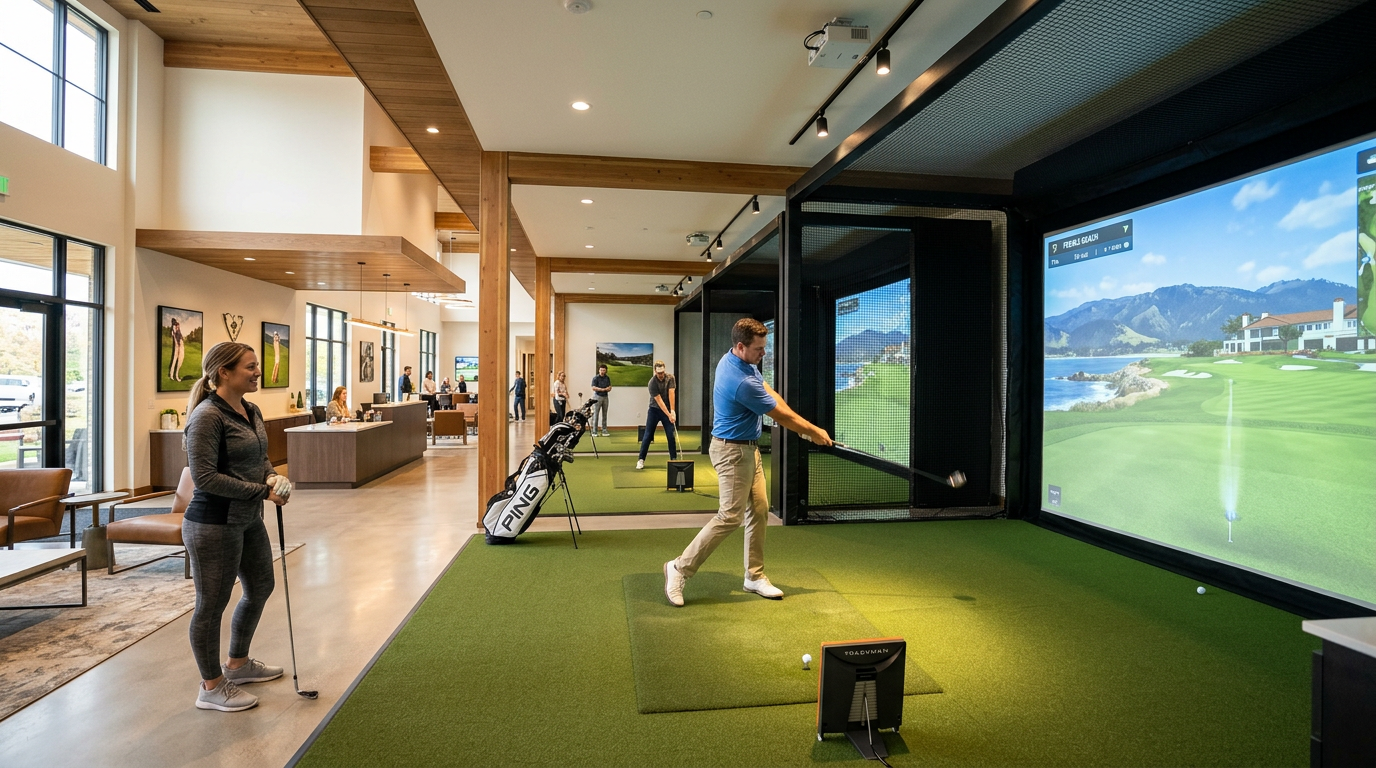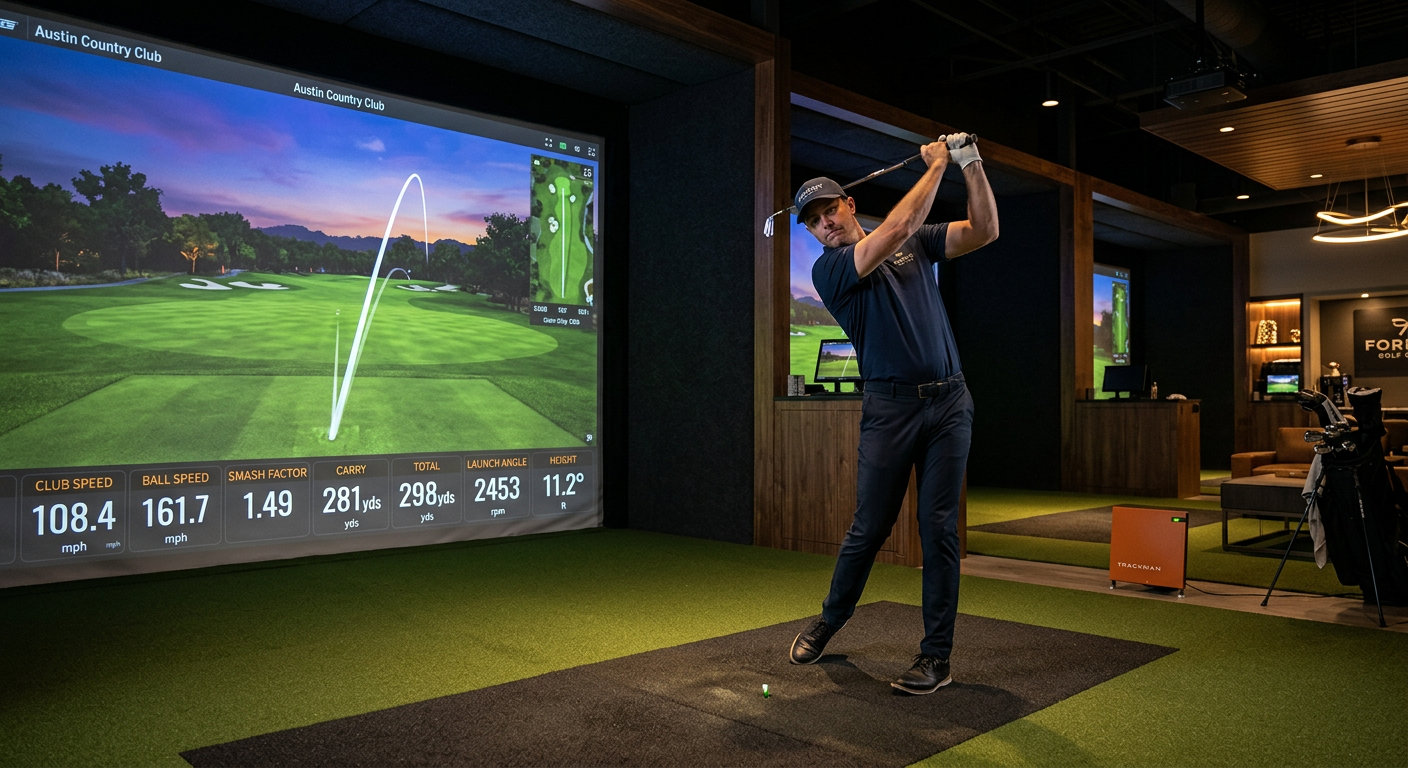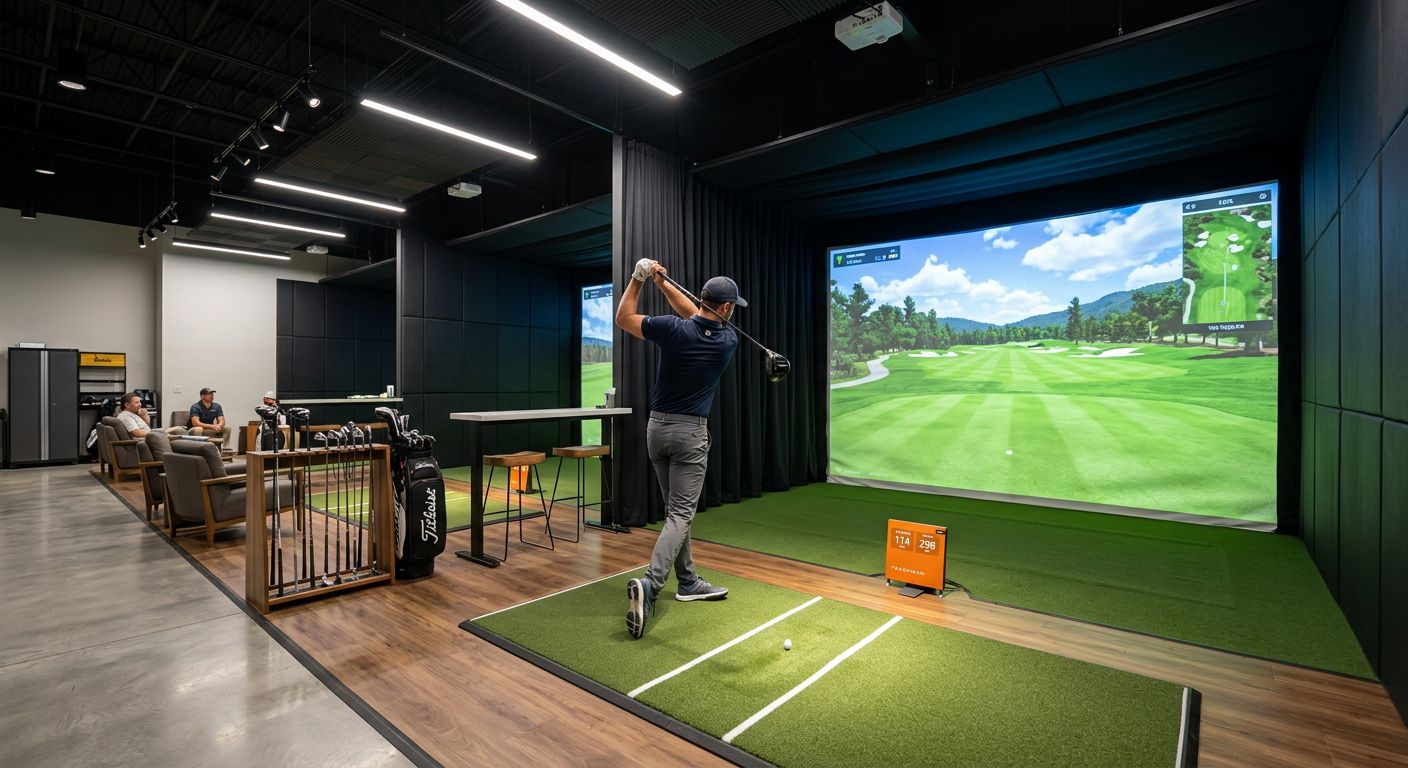
Determining the necessary ceiling height is the single most important step when planning an indoor golf setup. If the ceiling is too low, you risk damaging your property, breaking your clubs, or—perhaps worst of all—developing a permanent hitch in your swing known as indoor swing syndrome.
To answer the most urgent question: The absolute minimum ceiling height for a golf simulator is 9 feet, but the industry-recommended standard is 10 feet. If you are taller than six feet or have a particularly vertical swing plane, you may require 10.5 to 11 feet of clearance to swing a driver comfortably and without hesitation.
Why 10 Feet is the Gold Standard for Indoor Golf
While you might be able to swing a wedge or a short iron in a room with 8.5-foot ceilings, the driver is a different story. The length of the club, combined with the extension of your arms at the top of the swing and through the follow-through, creates a wide arc that requires significant vertical space.
For most golfers, a 10-foot ceiling provides the mental "breathing room" needed to swing at full speed. When you are worried about hitting a light fixture or scuffing the drywall, you subconsciously shorten your follow-through. This mechanical breakdown can ruin your progress. If you are currently measuring your garage or spare room and finding it lacks the necessary height, you can explore how much space do you need for a golf simulator to see if other dimensions like width and depth can compensate, or if a professional facility is a better fit.
Factors That Influence Your Ceiling Height Requirements
Not every golfer needs the exact same amount of clearance. Before you commit to a build or a do it yourself golf simulator project, consider these three variables that dictate your specific height needs.
Your Height and Swing Plane
A golfer who stands 5'7" with a flat, rounded swing will need significantly less ceiling height than a 6'4" golfer with a steep, upright swing. Taller players naturally have a higher apex at the top of their backswing. If you are on the taller side, even a 10-foot ceiling can feel cramped when you are trying to reach 115 mph clubhead speed with a 45-inch driver.
The Impact of Launch Monitor Technology
The type of technology you use also dictates space requirements. For example, TrackMan technology is a radar-based system that tracks the ball for a specific distance to provide the most accurate data. According to TrackMan simulator solutions, having adequate height isn't just about the swing; it is also about ensuring the radar has an unobstructed view of the ball's launch window.
Flooring and Turf Thickness
Many homeowners forget to account for the "subfloor" of the simulator. When you add a hitting mat, a landing carpet, and perhaps a putting green subfloor, you might lose 2 to 4 inches of vertical space. If your ceiling is exactly 9 feet and you add a 3-inch thick premium hitting mat, your effective swinging height is now only 8'9", which is dangerously low for most adults.
The Danger of Indoor Swing Syndrome
One of the primary reasons professional facilities like The Wedge in Forney prioritize high ceilings is to prevent "indoor swing syndrome." This occurs when a golfer’s brain recognizes a low ceiling or a nearby wall and forces the body to compensate.
Usually, this results in a "chicken wing" finish or a flat backswing to avoid contact with the ceiling. These compensations happen at a subconscious level, meaning you might be ruining your real-world golf swing without even realizing it. The PGA of America emphasizes that vertical clearance is vital for swing health, ensuring that your indoor practice actually translates to better scores on the course.
Local Building Codes and Home Modifications in Forney
If you are considering raising a ceiling or building a detached structure for your simulator in North Texas, it is important to consult local regulations. The City of Forney building permits department provides guidelines on residential structures and modifications.
For many residents in neighborhoods around Forney, garage ceilings are often the limiting factor. Standard double-car garages frequently feature 8-foot or 9-foot ceilings, which are often insufficient for a professional-grade setup. Before swinging a club, check for low-hanging garage door tracks or openers that could interfere with your swing arc.
Frequently Asked Questions About Simulator Height
Can I use a golf simulator with 8-foot ceilings?
It is generally not recommended. While you might be able to practice putting or short chips, you will almost certainly hit the ceiling with anything longer than a mid-iron. Swinging a driver in an 8-foot room is practically impossible for the average adult.
Does the launch monitor affect height requirements?
Yes. Radar-based systems (like TrackMan) and camera-based systems (like Foresight) have different "viewing angles." While the height requirement for the golfer remains the same, the placement of the sensor may require specific vertical clearance to "see" the ball properly as it hits the screen. You can learn more about these differences in our guide on how do golf simulators work.
What if my ceiling is slanted?
If you have a vaulted or slanted ceiling, you must ensure that the highest point is where your club reaches its peak. Usually, this means the golfer must stand in a specific spot where the "up-slope" provides enough clearance for the backswing and follow-through.
How do I measure my swing height safely?
The best way is to take a slow-motion video of your swing outdoors with a driver. Note the highest point the clubhead reaches relative to your head. Alternatively, carefully hold your driver at the highest point of your follow-through indoors to see how much "buffer" you have left.
Why Professional Facilities are the Best Solution
Building a home setup that truly mimics the conditions of a golf course is expensive and space-intensive. If your home doesn't meet the 10-foot height requirement, you shouldn't settle for a cramped swing that builds bad habits.
At The Wedge, we have designed our hitting bays to accommodate golfers of all heights and swing styles. By using industry-leading TrackMan technology in a space specifically optimized for ball flight and swing mechanics, we provide the accuracy and freedom that home setups often lack. If you are curious about how our pro-level environment compares to a DIY build, read our breakdown of how much a golf simulator costs.
Whether you are looking to fine-tune your yardages or just want to swing away without worrying about the ceiling, a professional environment is always the safest bet for your game.
Visit The Wedge in Forney
Don't let low ceilings cramp your style or ruin your swing. If you are looking for a place to practice with professional-grade clearance and the best technology in the industry, come see us at The Wedge. We provide a premium training environment for golfers throughout Forney and the surrounding North Texas area.
Contact us today to learn more about our membership options and start practicing in a space designed for your best swing.