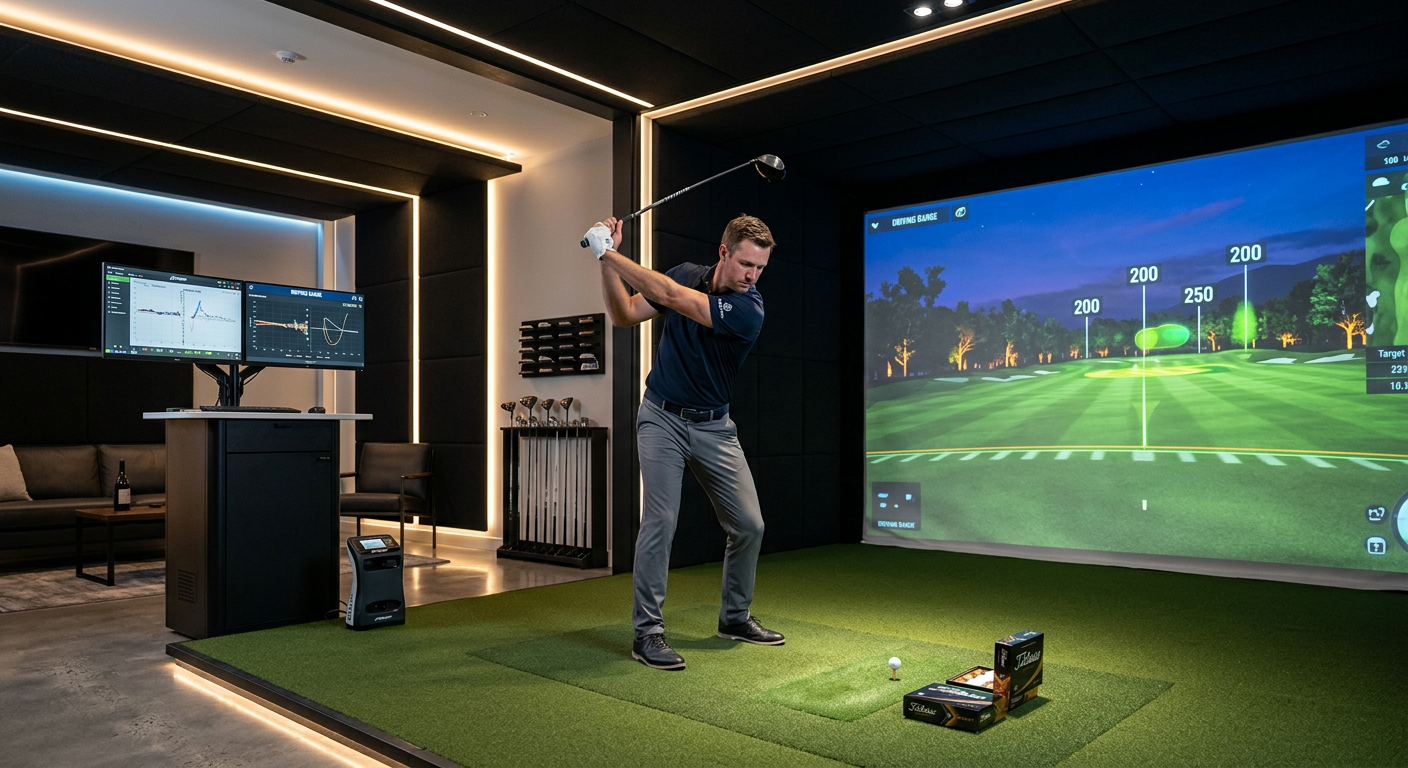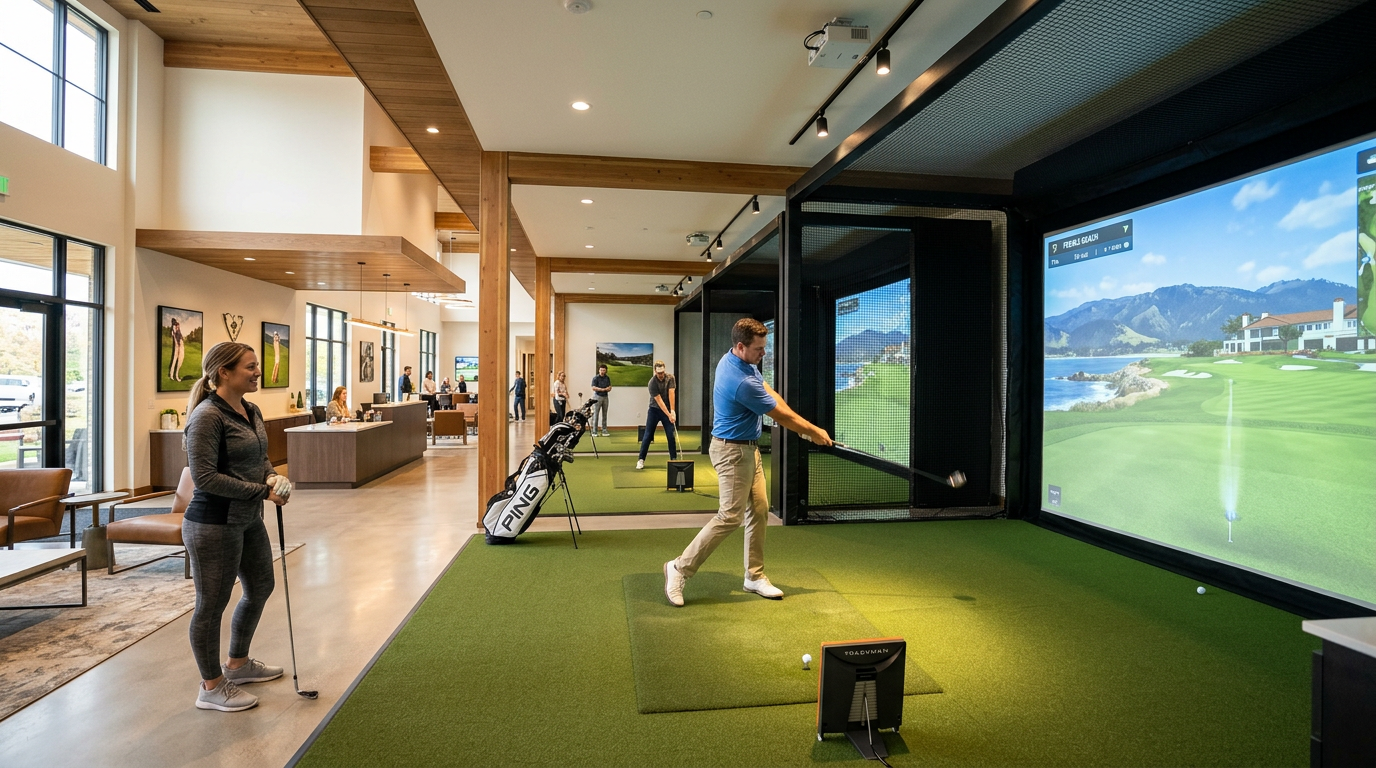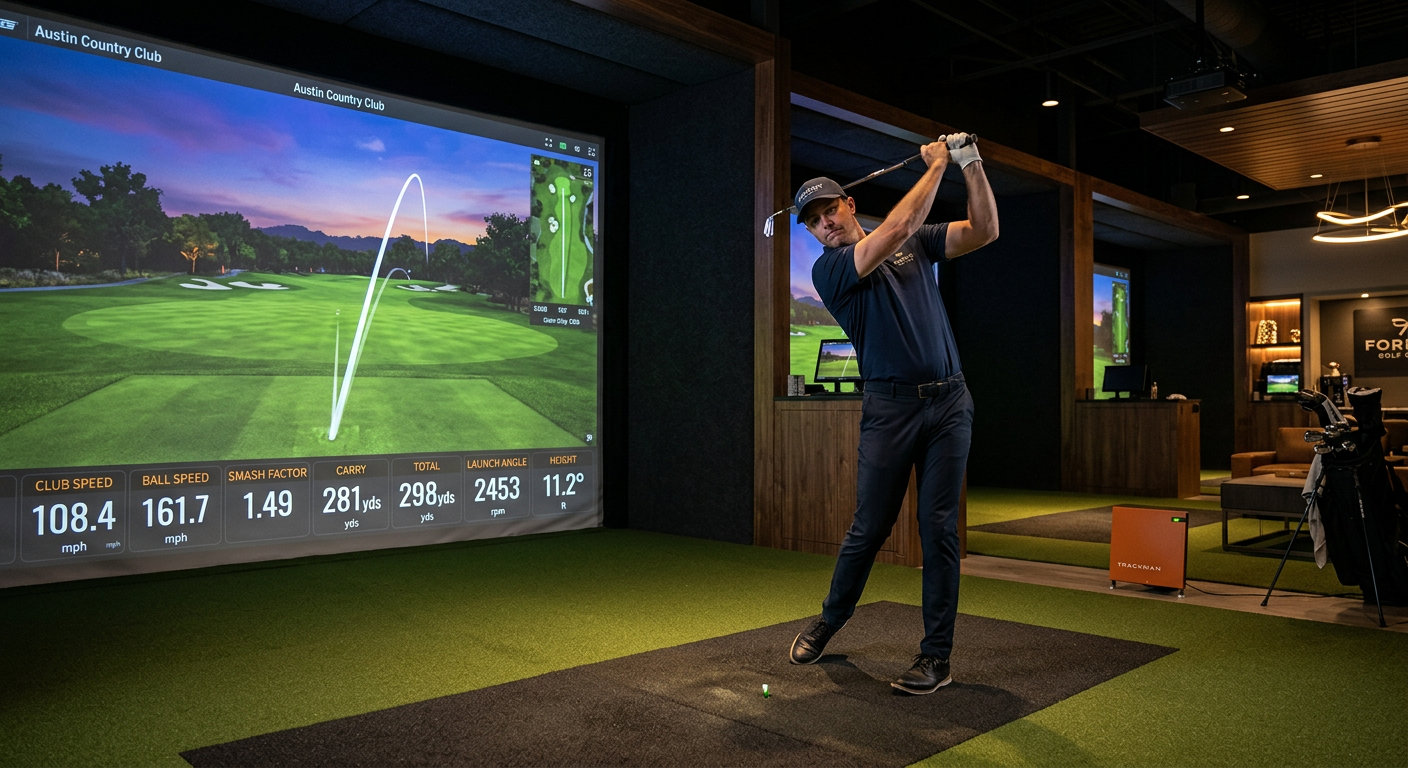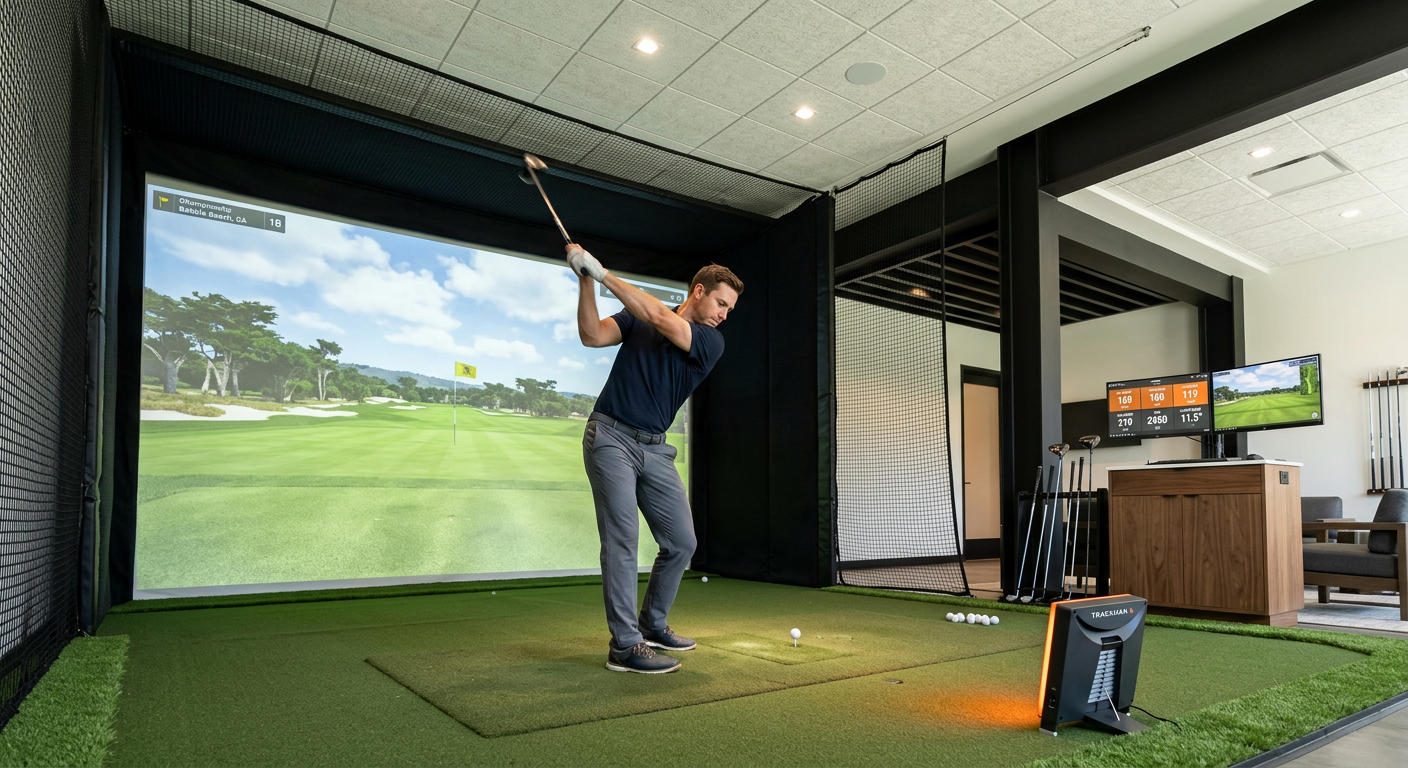
When planning an indoor practice space, the most critical measurement is vertical. If you are wondering how tall do ceilings need to be for a golf simulator, the answer depends on your height and swing, but the industry gold standard is 10 feet. While some golfers can get away with a 9-foot ceiling, reaching that 10-foot mark ensures you can swing every club in your bag—including the driver—without the fear of damaging your hardware or your home.
At The Wedge, we understand that spatial requirements are the biggest hurdle for golfers in Forney and Rockwall looking to build a home setup. While many modern Texas homes offer high ceilings in certain rooms, standard 8-foot ceilings are almost universally unsuitable for golf simulators. Before you invest in a tracking system or an impact screen, it is vital to understand the technical requirements and safety margins necessary for a functional hitting bay.
The Minimum Ceiling Height for Safety and Comfort
The Minimum Ceiling Height for Safety and Comfort
While the absolute minimum height is often cited as 9 feet, this is only a baseline. A 9-foot ceiling might work for a golfer who is 5'8" with a shallow swing plane, but it offers zero margin for error. If a guest comes over who is taller or has a more upright swing, they could easily strike the ceiling on their follow-through.
The reason 10 feet is the recommended standard is purely functional. Most impact screen frames and enclosures require a few inches of clearance at the top for assembly. Furthermore, swinging a 45-inch driver creates a massive arc. If you are constantly worried about hitting the ceiling, you will subconsciously develop a "swing yip," shortening your follow-through and ruining your mechanics. For those who want the best possible experience, aiming for 10.5 to 11 feet allows for overhead lighting and professional-grade enclosures.
Factors That Influence Your Ceiling Height Needs
Not every golfer requires the same amount of vertical room. Several variables dictate whether you can squeeze a simulator into a finished basement or if you need to look into a professional facility.
Player Height and Swing Plane
A golfer who stands 6'2" naturally has a higher reach at the top of their swing than someone who is 5'5". However, your swing style is equally important. A "steep" swing, where the club moves more vertically, requires significantly more ceiling clearance than a "flat" or shallow swing. If you are unsure of your requirements, have a friend film your swing from the side against a marked wall to see exactly how high your driver head reaches.
The Impact Screen and Frame
When you learn how to build a golf simulator, you quickly realize that the tech isn't the only thing taking up space. Commercial-grade impact screens are often mounted on 10-foot frames. According to technical specifications from Carl's Place, you need enough height to not only clear the frame but also to allow for the sag and tensioning of the screen material itself.
Launch Monitor Placement
If you are using a camera-based system, it might be mounted overhead. If you are using a radar-based system like the TrackMan 4, the unit usually sits on the floor behind you. However, the TrackMan simulator minimum space requirements emphasize that even with floor-based units, the room's height must remain consistent to avoid signal interference and to ensure the player feels comfortable enough to create real-world clubhead speed.
Why 8-Foot Ceilings are a Dealbreaker
Why 8-Foot Ceilings are a Dealbreaker
Many standard residential rooms and older garages in the Forney area feature 8-foot ceilings. While this is fine for a living room, it is almost impossible to swing a golf club safely in this space. Even an iron swing can be risky for an average-sized adult. Attempting to force a simulator into an 8-foot room often results in:
- Damage to the drywall or ceiling joists.
- Broken club shafts or shattered driver heads.
- Altered swing mechanics due to "ceiling shy" behavior.
- Inability to use an enclosure, leading to errant balls bouncing around the room.
If you are a Forney resident considering a home addition or garage conversion to accommodate a simulator, be sure to consult the City of Forney Building Permits & Inspections department. Raising a ceiling or modifying a roofline requires specific structural permits to ensure the safety of your home.
Testing Your Space Before You Buy
Before purchasing equipment, the best way to verify your space is to perform a "dry swing" test. Take your driver—the longest club in your bag—and slowly move through your swing path in the desired room. If you feel any hesitation or if the club comes within 6 inches of the ceiling, the space is too small.
For many golfers in the Heath and Rockwall areas, the physical limitations of a home are why they choose a membership at a professional facility. When considering how much space do you need for a golf simulator, it is often more cost-effective to use a professional bay than to undergo a major home renovation.
Frequently Asked Questions
Can I have a golf simulator in a room with 9-foot ceilings?
Yes, it is possible for many golfers, but it is tight. You likely won't be able to use a raised flooring system (which hides cables and provides a putting surface) and you may need to avoid certain types of overhead enclosures.
Does a simulator affect my swing if the ceiling is too low?
Absolutely. This is often called "indoor swing syndrome." Even if you aren't actually hitting the ceiling, the visual proximity of the roof causes you to flatten your swing or hold back on power, which can lead to bad habits on the real course.
Is height the only measurement that matters?
No. While height is the biggest hurdle, you also need sufficient width (usually 10-12 feet minimum) to avoid hitting the side walls, and depth (15-20 feet) to allow for the ball to travel to the screen and for radar tracking. You can find more details in our guide on how much room do you need for a golf simulator.
What if I only want to practice with irons?
If you strictly practice with shorter clubs, you can get away with slightly lower ceilings. However, most golfers eventually want to hit every club, so building a setup that doesn't allow for a driver is usually a decision people regret later.
Experience Professional Dimensions at The Wedge
If your home doesn't have the 10-foot clearance required for a safe and effective practice session, don't compromise your swing. At The Wedge, our facility in Forney is designed with professional-grade dimensions to ensure every golfer can swing freely with elite TrackMan technology.
Whether you are looking for a membership to sharpen your game year-round or just want to see what a professional simulator setup looks like before you build your own, we are here to help. Our bays provide the height, width, and depth necessary to capture accurate data without the limitations of a cramped garage. Visit us today and discover why we are the preferred choice for golfers in the Forney area looking for an uncompromising indoor experience.