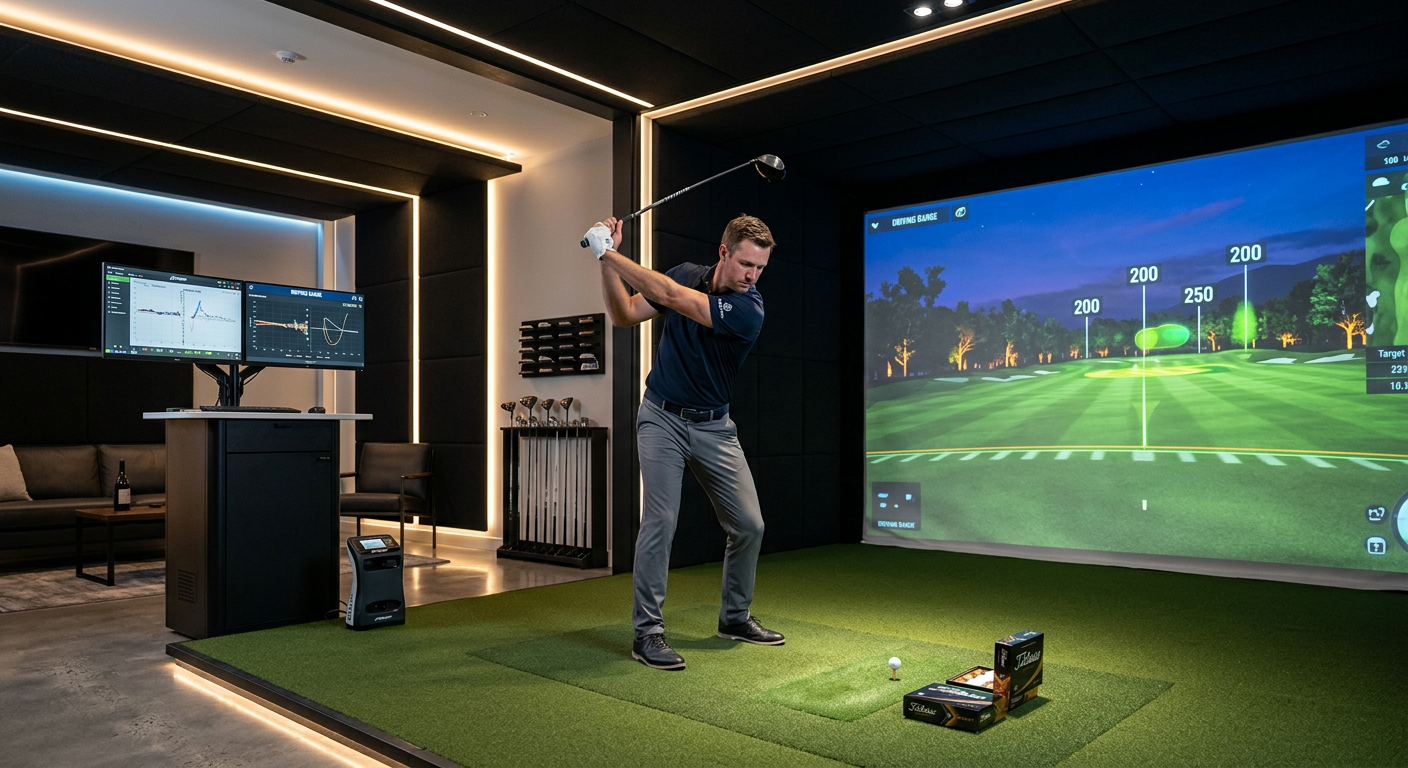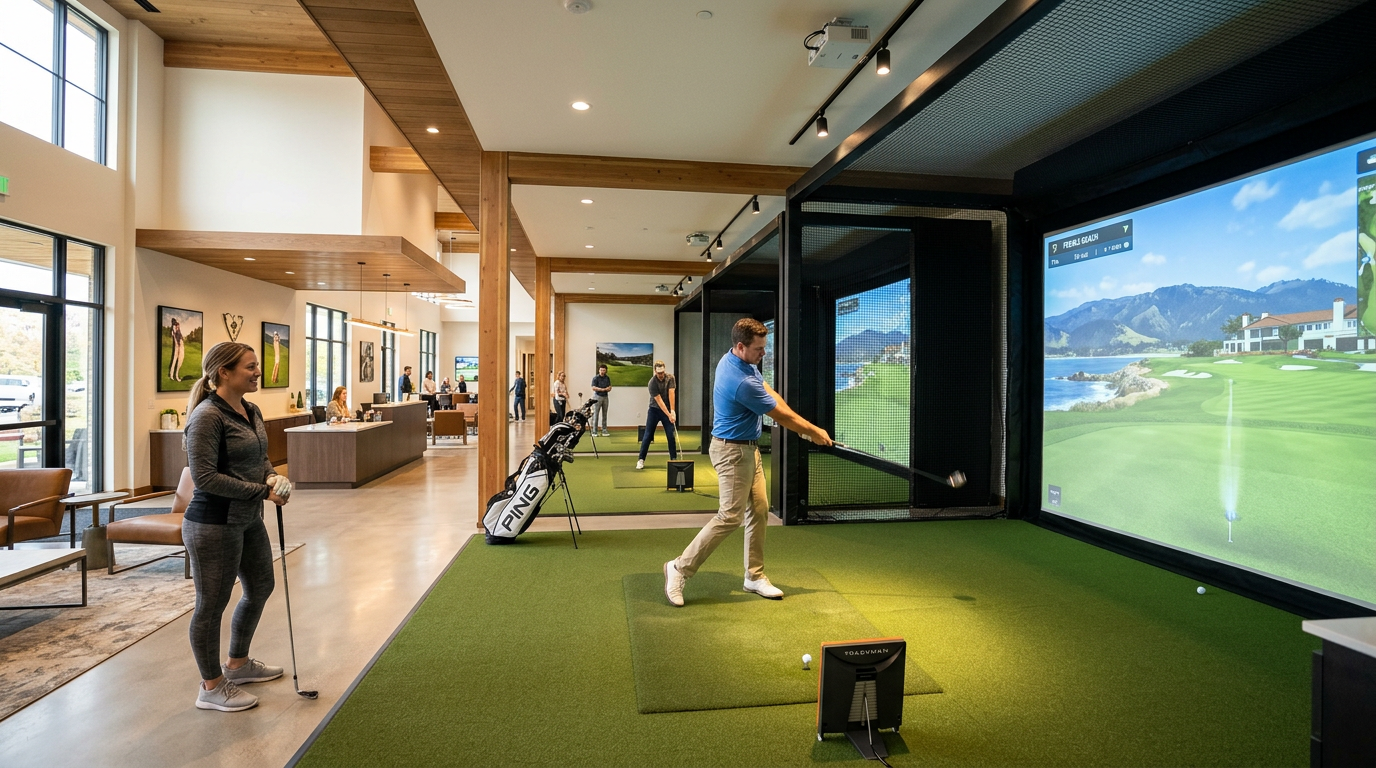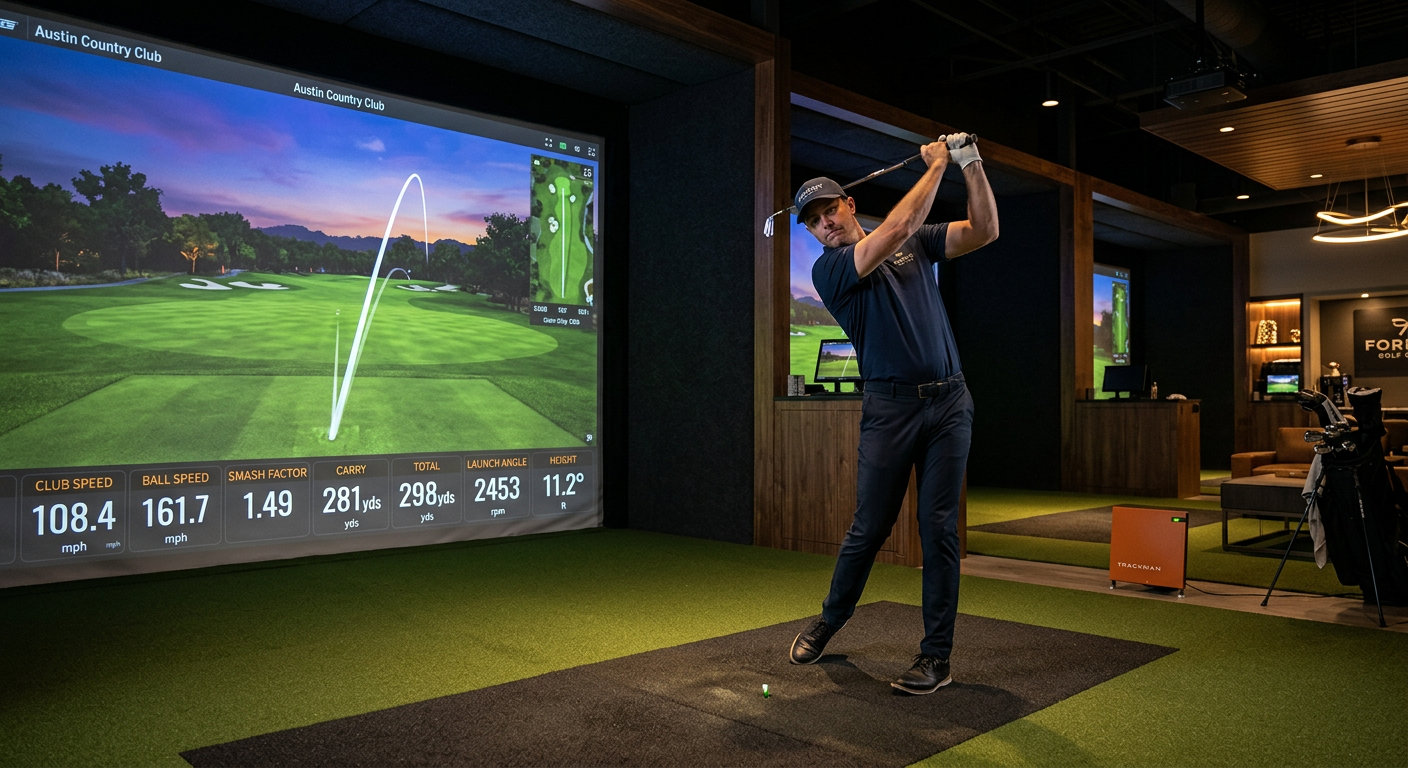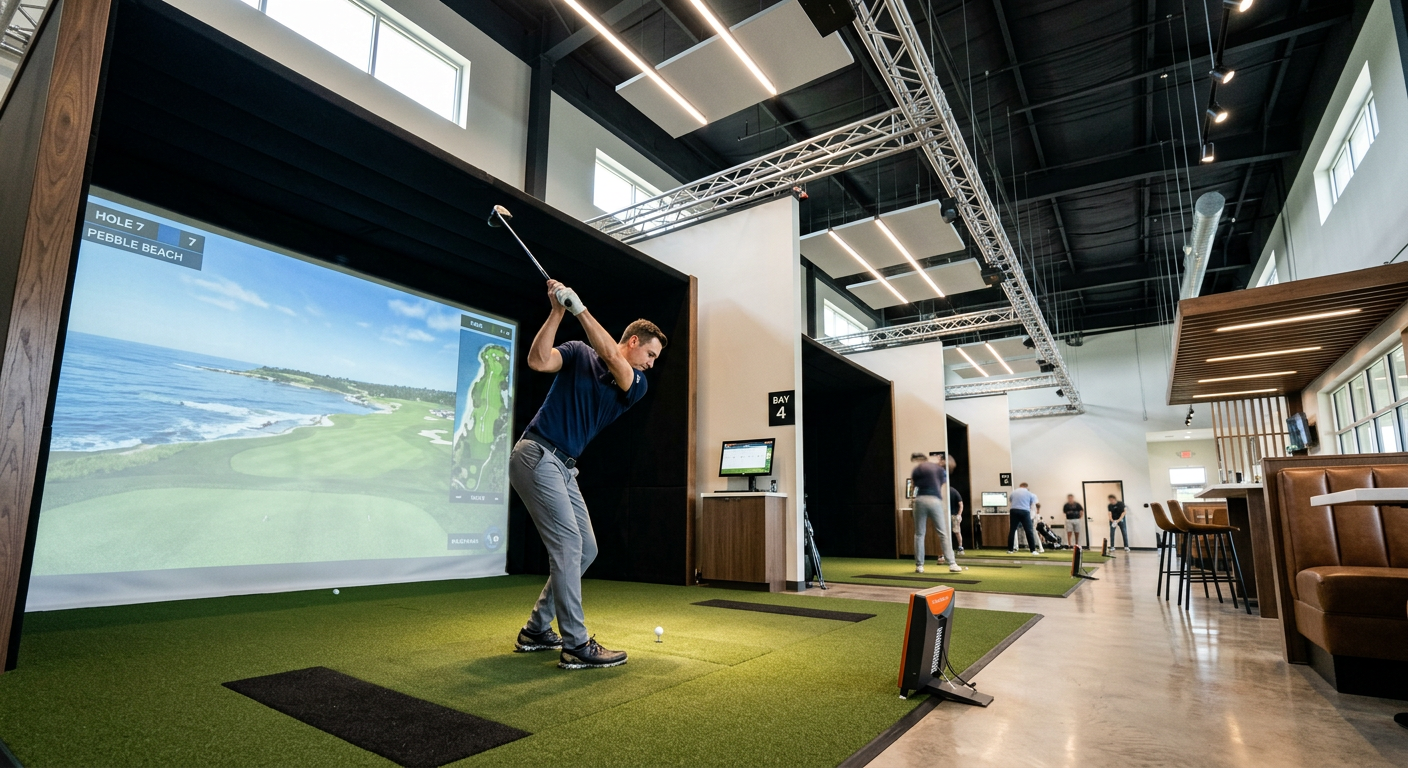
Choosing the right space for a golf simulator often starts with a single, critical question: how tall does the ceiling need to be? While you can technically swing a club in a room with 9-foot ceilings, the industry standard for a comfortable, unrestricted driver swing is 10 feet. If you are taller than 6 feet or have a particularly vertical swing plane, you may even require heights of 10.5 to 11 feet to avoid the dreaded ceiling consciousness.
At The Wedge in Forney, we have designed our facility to remove these spatial anxieties, providing an environment with professional-grade clearance so you can focus entirely on your ball flight data rather than the distance between your clubhead and the drywall.
The Minimum vs. Recommended Height Requirements
When planning a home setup, it is tempting to try and squeeze a simulator into a standard 8-foot or 9-foot room. However, ceiling height is the one dimension you cannot compromise on without risking damage to your home or your golf swing.
The absolute minimum height for most golf simulators is 9 feet. At this height, most golfers can swing their irons and wedges comfortably. However, the moment you pull a driver or a fairway wood out of the bag, a 9-foot ceiling becomes a hazard. For a truly versatile space that accommodates every club in your bag and guests of various heights, 10 feet is considered the gold standard.
According to technical specifications from Carl's Place - Golf Simulator Ceiling Height Requirements, 10 feet provides the necessary clearance for the enclosure and the overhead strike zone, ensuring that even a high-launching wedge shot doesn't strike the ceiling frame before hitting the impact screen.
Why Your Specific Swing Dictates the Height
Ceiling height is not just about the equipment; it is about the golfer. Two players of the same height can have vastly different vertical reach depending on their swing mechanics. A golfer with a "steep" swing moves the club more vertically, requiring more overhead room than a golfer with a "flat" or "shallow" swing.
Furthermore, being in a cramped space triggers a psychological phenomenon known as ceiling consciousness. Even if your club isn't actually hitting the ceiling, if you *think* it might, your brain will subconsciously alter your swing to stay flat. This leads to poor form and "swing compensation" that can ruin your progress on the real course.
If you are concerned about whether your home space is large enough, you might find our guide on how much room do you need for a golf simulator helpful for mapping out your floor plan.
Technical Needs for TrackMan Technology
At The Wedge, we utilize TrackMan 4 technology, which is widely regarded as the pinnacle of launch monitor accuracy. While the ceiling height primarily protects your clubs and your house, the depth and width of the room are what allow the technology to work its magic.
TrackMan requires specific radar clearance to track the ball accurately from impact through the first few feet of flight. Ideally, you want 12 to 15 feet of depth and at least 10 feet of width to ensure the radar has a clear "view" of the ball. You can learn more about how these precision tools capture your data on our technology page.
If you are building a home setup in the Forney area, it is also important to consider local building codes. If you are planning a garage conversion or a room addition to achieve these heights, you should consult the City of Forney - Building Inspections & Permits department to ensure your project meets residential construction standards.
The Limitations of Basement and Garage Setups
The two most common places for a DIY simulator are garages and basements. Each presents unique challenges:
1. **Garages:** Many standard Texas garage ceilings are 8 or 9 feet. While this is tight, some homeowners "vault" a section of the ceiling between the rafters to gain that extra foot of clearance.
2. **Basements:** Since basements are rare in North Texas, most local golfers focus on garage or spare room builds. If you are lucky enough to have one, ductwork and support beams are your biggest enemies, often hanging lower than the actual ceiling joists.
If you find that your home dimensions just won't work, don't worry. Many golfers in Forney, Rockwall, and Terrell choose membership at a professional facility rather than dealing with the costs and structural limitations of a home build. For a comparison of the financial commitment, check out our breakdown on how much does a golf simulator cost.
Frequently Asked Questions About Simulator Dimensions
Can I use a golf simulator with an 8-foot ceiling?
It is not recommended. While you might be able to swing a short iron, you will almost certainly hit the ceiling with a driver. Moreover, the psychological fear of hitting the ceiling will prevent you from making a natural, full swing.
What happens if I hit the ceiling during a swing?
Aside from potential damage to your club and the ceiling, hitting a surface mid-swing can cause injury to your wrists or lead to a broken club shaft. It is always better to have at least 6 to 12 inches of "buffer" space above your highest swing point.
How much width do I need if the height is correct?
While height is the biggest hurdle, width is also vital. You generally need at least 10 feet of width so that you can center the ball and not feel like you are going to hit the wall behind you on your backswing.
Does the launch monitor brand affect the ceiling height?
Generally, no. Whether you use TrackMan, Foresight, or SkyTrak, the ceiling height is determined by the physical arc of the golfer's swing. However, some overhead-mounted units may require a specific mounting height (usually 9-11 feet) to function correctly.
Practice Without Limits at The Wedge
Building a home simulator is a massive undertaking that often requires structural changes to achieve the necessary 10-foot clearance. If you aren't ready to tear into your garage rafters or deal with the complexities of how to build a golf simulator, The Wedge is here to help.
Our facility is designed with the professional standards recommended by TrackMan Golf, ensuring every player has the vertical and horizontal space needed to swing freely. Whether you are a tall golfer or just someone who wants to practice in a high-tech, worry-free environment, we invite you to experience the best indoor golf Forney has to offer.
Ready to see what specialized training can do for your game? About us and our mission to help Texas golfers improve year-round, or visit us today to see our professional bays in action.