Understanding the Core Components of a Golf Simulator
A golf simulator is an advanced technological ecosystem designed to translate a physical golf swing into a precise digital representation. While it may look like a high-end video game, the underlying mechanics involve complex physics and sophisticated hardware. To understand how a golf simulator works, you have to look at the three essential components: the launch monitor (the sensor), the software (the brain), and the projection system (the visual interface).
The journey of a simulated shot begins the moment your club head moves toward the ball. The sensor captures data points such as club speed, face angle, and path. This information is instantly sent to a computer running specialized software, which calculates the ball's trajectory based on real-world physics—including air resistance and gravity—before projecting the resulting flight path onto a screen in front of the golfer.
The Role of the Launch Monitor
The launch monitor is the most critical piece of hardware in the entire setup. It acts as the "eyes" of the simulator. There are generally two types of launch monitors: camera-based (photometric) and radar-based (doppler). Camera-based systems use high-speed shutters to take thousands of images per second accurately capturing the ball’s initial launch conditions.
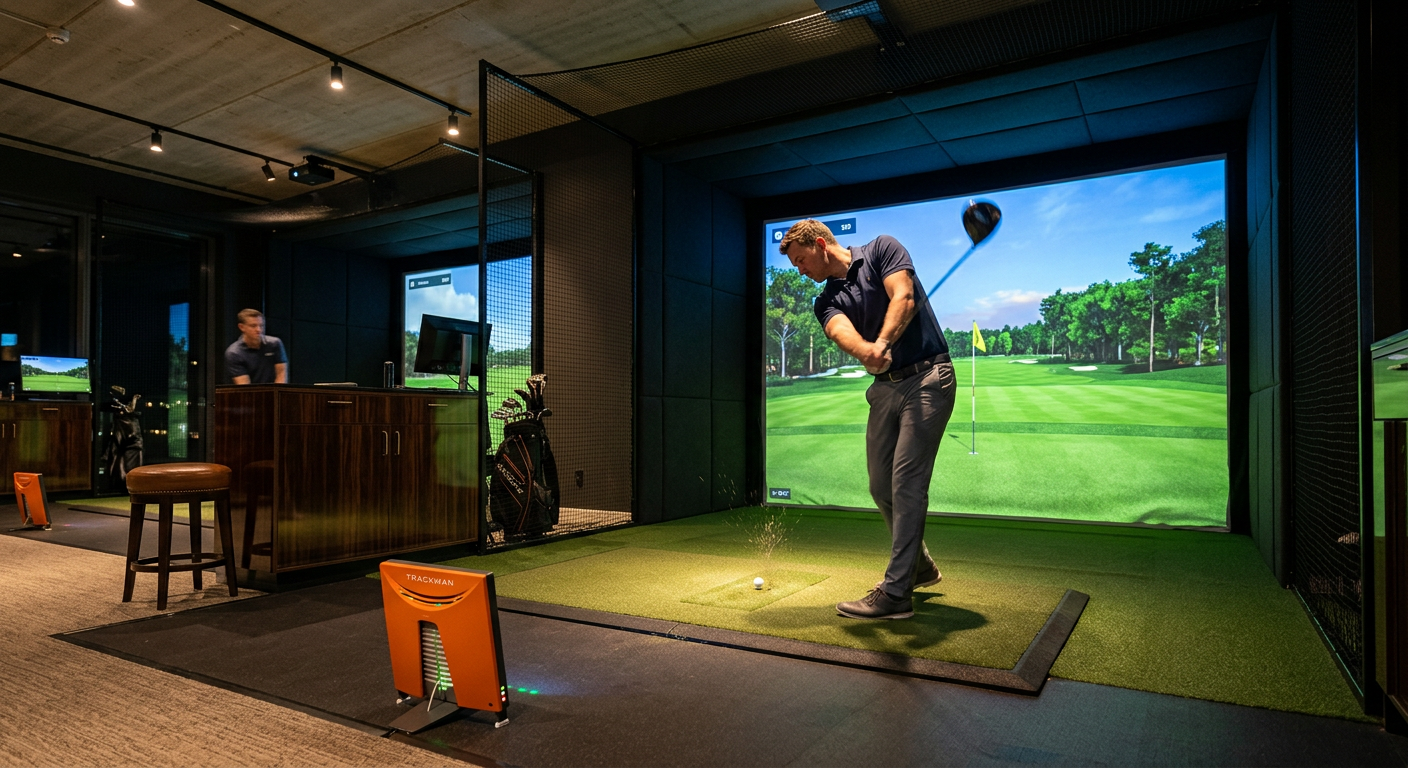
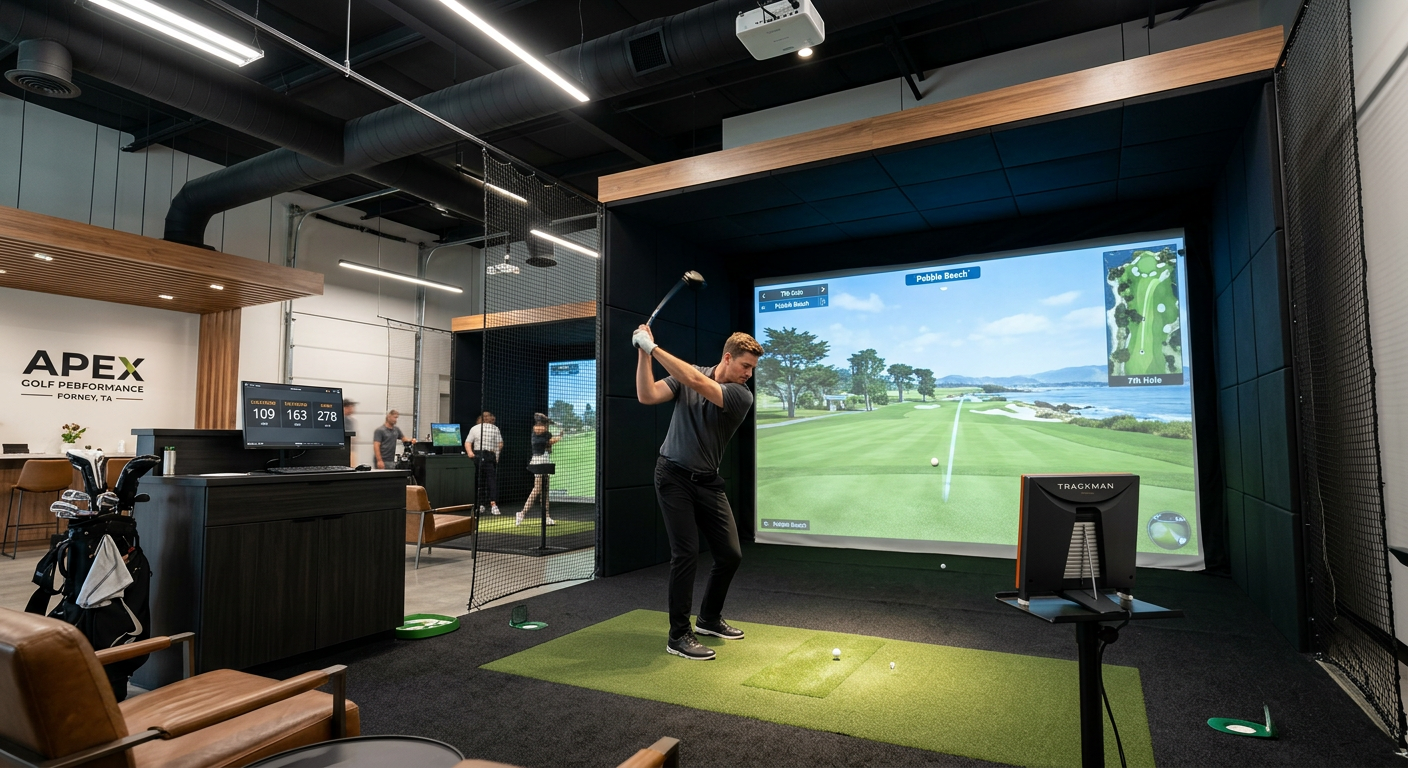
At The Wedge in Forney, we utilize TrackMan technology, which represents the pinnacle of radar-based systems. TrackMan uses Dual Radar Technology, also known as Optically Enhanced Radar Tracking (OERT). This system employs two radar units: one dedicated to tracking the club’s movement (path, face angle, and attack angle) and another focused entirely on the ball’s flight (launch angle, spin rate, and ball speed). By measuring the Doppler Effect—the change in frequency of waves as an object moves—radar systems can track the ball’s actual flight over a short distance and then calculate the remainder of its path with incredible precision.
How High-Speed Cameras and Sensors Capture Data
While radar systems like TrackMan are excellent for tracking ball flight, many simulators also incorporate high-speed cameras to monitor impact location. Modern technology can now measure exactly where the ball strikes the clubface within 1mm of accuracy. This level of detail provides feedback that is often impossible to see with the naked eye on a traditional outdoor range.
According to a technical breakdown of TrackMan's technology, the dual-radar system ensures that both the club and the ball are analyzed independently. This eliminates the "guessing" that occurs in lower-end systems. When you hit a shot, the sensors are looking for specific markers:
Ball Speed: The velocity of the ball immediately after impact.
Launch Angle: The vertical angle at which the ball leaves the clubface.
Spin Rate: The amount of backspin or sidespin, which determines the curvature and lift of the ball.
Smash Factor: The efficiency of energy transfer from the club to the ball.
Software and Physics Engines
Once the launch monitor captures the raw data, the simulator software takes over. This software is built on sophisticated physics engines that account for environmental variables. Even though the ball only travels a few feet into a screen, the software calculates how that ball would behave over 250 yards in the real world.
The software factors in "normalization," which allows golfers to see how their shots would perform in different weather conditions or at different altitudes. For instance, if you are practicing in Forney but want to see how your ball would fly at a high-altitude course in Colorado, the software adjusts the air density calculations in real-time. This is why many local professionals and enthusiasts prefer to use our indoor golf ranges for serious practice; the data is consistent and unaffected by the Texas wind.
The Visual Experience and Course Rendering
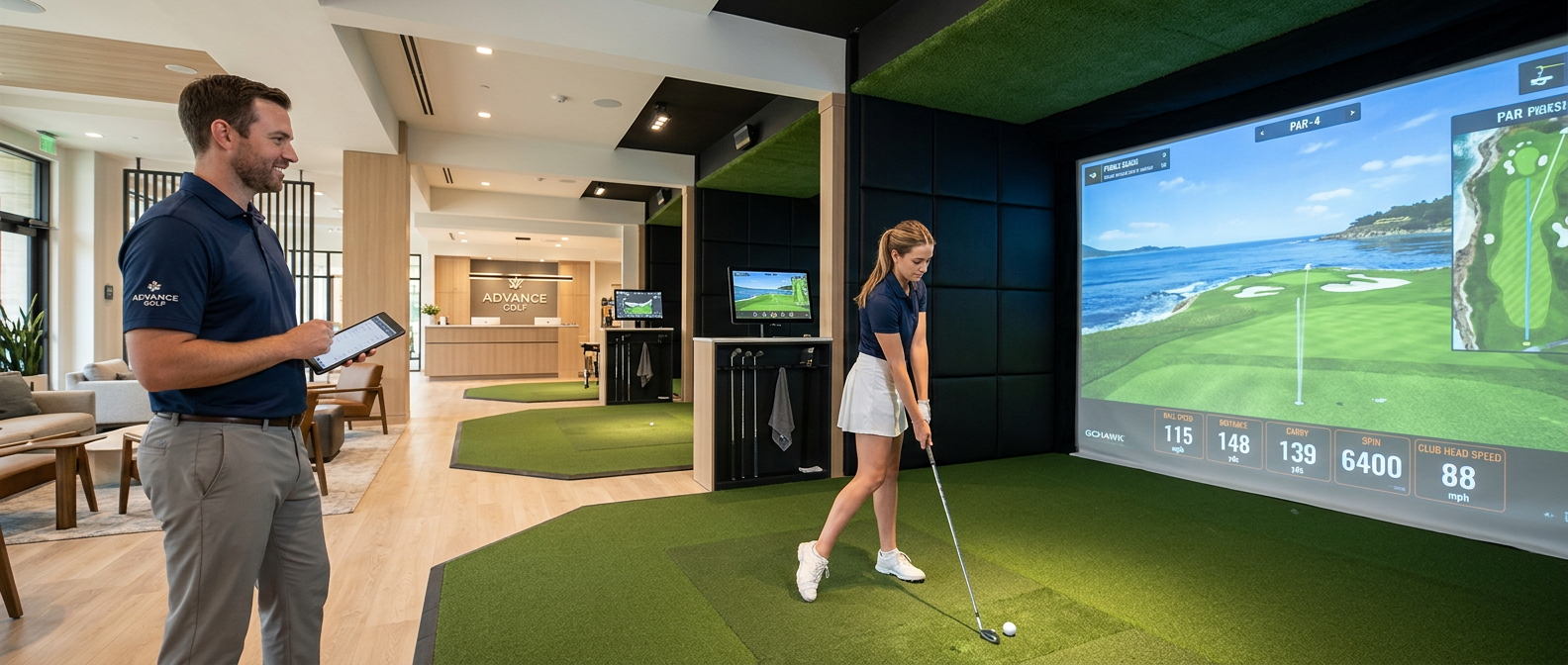
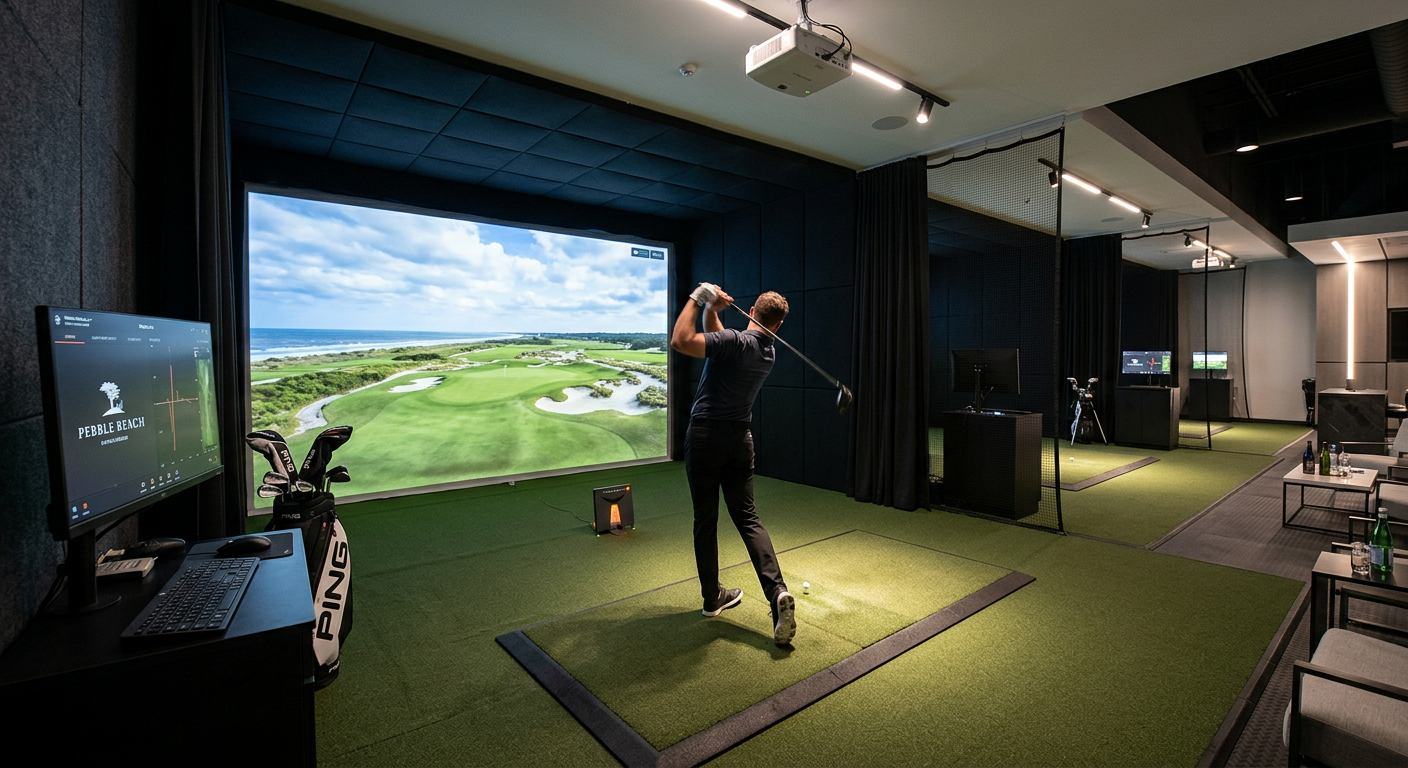
The final piece of the puzzle is the projection and hitting screen. A high-lumen projector displays the software's output onto a heavy-duty, impact-resistant screen. These screens are designed to handle ball speeds exceeding 200 mph while remaining flat enough to provide a crisp image of legendary courses like Pebble Beach or St Andrews.
The growth in this technology has led to a massive increase in off-course participation. In fact, data from the National Golf Foundation shows that more people are engaging with the sport through simulators and off-course venues than ever before. This shift is largely due to the accuracy and convenience these systems provide, allowing for a full round of golf in communication with the Forney Area Chamber of Commerce business community and local residents without the four-hour time commitment.
Comparing Indoor Training to the Outdoor Range
Many golfers wonder if the data they receive indoors is truly as accurate as seeing the ball fly outdoors. While a traditional range allows you to see the actual ball flight, it doesn't provide you with the "why" behind the shot. Are golf simulators accurate? The answer lies in the data. While an outdoor range provides visual feedback, a simulator provides objective data points like club path and face-to-path ratios that are impossible to accurately gauge by eye.
For those considering setting up their own practice space, it is important to understand the logistical requirements. You can learn more about the necessary dimensions in our guide on how much room you need for a golf simulator. However, professional-grade systems like those found at The Wedge offer a level of calibration and high-end hardware that is often difficult to replicate in a home DIY environment.
Frequently Asked Questions
Do golf simulators account for wind and weather?
Yes. Professional simulator software allows you to adjust wind speed, direction, and even ground firmness. This helps golfers practice specific "stinger" shots or learn how to play in various conditions.
Can a simulator help with my swing mechanics?
Absolutely. Because the sensors measure club data (like path and face angle), a simulator tells you exactly why a ball sliced or hooked. This immediate feedback loop is one of the fastest ways to improve your game.
Is the distance on a simulator the same as on the course?
In most cases, yes. High-end simulators are calibrated to match the physics of real golf balls. However, environmental settings in the software (like altitude) must be set correctly to reflect your local playing conditions.
What is the advantage of dual radar technology?
Systems like TrackMan use two radars so that one can focus on the club through the impact zone while the other tracks the ball's launch. This results in significantly higher accuracy compared to single-unit sensors.
Enhance Your Game at The Wedge
Understanding the mechanics of a golf simulator is just the first step. To truly see the benefits, you need to experience the precision of TrackMan technology for yourself. Whether you are looking to shave a few strokes off your handicap through dedicated practice or want to enjoy a round at a world-class course without leaving Forney, we have the tools you need. If you're curious about bringing this tech to your house, check out our guide on how much a golf simulator costs, or simply visit us to use the best equipment available today.
Visit The Wedge in Forney to see our technology in action and take your performance to the next level.